
According to Mashreq, the Albanian media outlet “Birren” addressed the threats posed by the terrorist organization of the MKO in Albania in a comprehensive report. In parts of the report, prepared by “Fatiun Ginai” and “Enni Farahati”, it is stated that the MKO is under investigation for inciting war and cyber attacks:
For the past two years, Albanian law enforcement agencies have been engaged in a complex investigation against MEK members accused of carrying out cyberattacks against Iran, which are considered a violation of their humanitarian support agreement in Albania.


The special prosecutor’s office is investigating charges of incitement to war, illegal collection of computer data, and tampering with computer systems against members of the group.
“We are in the stage of an in-depth investigation, in particular examining hundreds of seized devices,” Vladimir Mara, the prosecutor in the case, told BIRN. “I can say that international partners are also involved in this investigation.”
Albania currently hosts around 2,500 MEK members in the Ashraf 3 terrorist camp in the Manzur region. Although their protection status has not changed, the Albanian Interior Ministry told BIRN that it is “reviewing applications for extension of residence of MEK members on a case-by-case basis.”
“Albania knew from the beginning that accepting the MEK was a political risk, but it must be said that the country has not been able to control it in a way that does not jeopardize its security,” says international relations analyst Andriy Taffani.
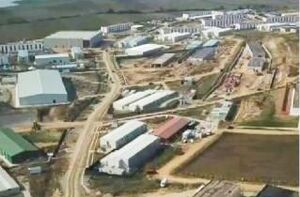
Byrne Tafani compares the current history of the MEK to the anti-communist Albanian community in Western Europe during the Cold War, which declined in numbers and political importance over time. The report continues: Since 2018, MEK members in Albania have been housed at Camp Ashraf 3, a military base consisting of 127 buildings in the Manz Durres region, covering an area of about 40 acres.
Of the approximately three thousand Iranians who were transferred to Albania, it is estimated that about 450 have left the camp and the country so far. The group is often described as a cult due to its worship of its disappeared leader, Massoud Rajavi, and his wife Maryam. Since the 1980s, MEK members have declared that they have renounced family and romantic relationships in order to live a revolutionary life!
In early 2023, Albania’s Cyber and Counterterrorism Police launched an investigation against MEK members, alleging that they were involved in political activities and cyberattacks against institutions of the Islamic Republic of Iran.
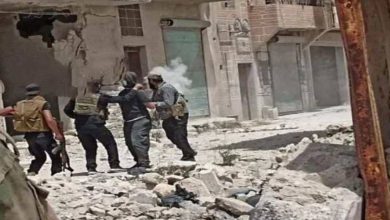
This investigation initially focused on monitoring social media, particularly Telegram, and ultimately led to a police raid on Camp Ashraf 3 on June 20, 2023. The police entry into the camp was met with resistance and clashes from MEK members, resulting in the injury of 15 police officers and 21 camp members.
At the end of the operation, 96 computers, ten laptops, tablets, and a large amount of documents were seized. Some MEK members tried to destroy the documents with fire, but were unsuccessful.
The report added: “Albania accepted the MEK mainly for humanitarian reasons and under pressure from the US and the UN, but the lack of advanced security infrastructure and the capacity to monitor the camp’s activities has created challenges,” said Redi Kilici, a lawyer and expert on the case. According to him, Albania cannot handle this sensitive situation alone and any decision requires coordination with the US and the UN.
Tafani also emphasizes that Albania does not have a clear strategy for dealing with the MEK community, especially after allowing them to build an independent city, which has made it difficult for them to integrate into Albanian society.
“The problem is that if Albania were to take action, the entire MEK political structure would collapse, and this would not be accepted by international allies. Ultimately, Albania is stuck in a strategic impasse and is only trying to minimize the consequences of this situation,” Byrne’s report concludes.
Western countries, especially Europeans, which have a long and undeniable history of creating, supporting, financing, and sheltering terrorist groups and terrorists, also supported Rajavi’s terrorist sect within the framework of the approach of cultivating terrorism and using terrorists as a tool.
Western countries have provided and continue to provide extensive opportunities to the MKO, which they believe they can exploit to advance their anti-Iranian policy.
Albania’s agreement to establish Rajavi’s terrorist organization on its soil, the European Union’s removal of Rajavi’s terrorist organization from its list of terrorist groups, the presence of Western political figures at Rajavi’s organization’s events, and the issuance of permits for holding events by European countries, are examples of Western support and sympathy for the MKO.
In fact, European countries have become a haven and supporter of the Rajavi organization at the cost of risking the lives of their citizens to achieve their anti-Iranian goals. A review of the actions of the terrorist organization of the MKO clearly shows that their principles are completely consistent with the issue of crimes against humanity and in conflict with human rights and international law.