
Good and Bad Terrorism: Reflections of the Sydney Crime and the Gaza Genocide in Western Media
Association for Defending Victims of Terrorism – Mehr News Agency, in a report, examined the media coverage of the terrorist act in Australia and the crime of state terrorism by the Zionist regime in Gaza.

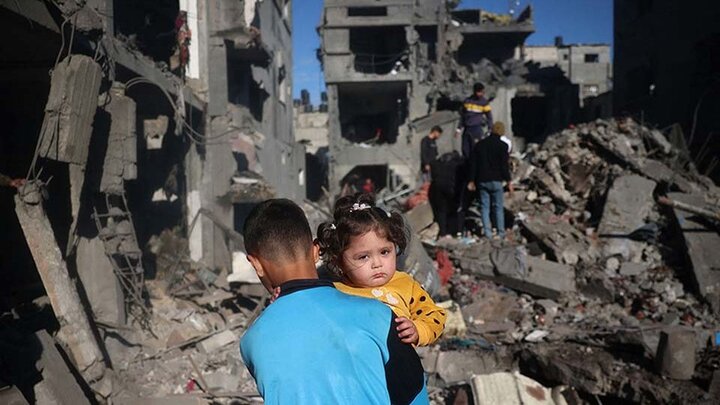
The report states that condemnation of the attack on the Jewish ceremony on Sydney’s waterfront will only have real meaning and validity if it is applied equally and without discrimination to all victims of violence around the world.

The armed attack on a gathering of civilians on Sydney’s Bondi Beach, which left dozens dead and injured, is strongly condemned. Targeting ordinary people anywhere in the world, regardless of their religion or identity, is a flagrant violation of humanitarian principles and international law and has no justification. However, condemning this attack should not prevent us from criticizing the way it was portrayed in the Western media and comparing this response to the silence or selective treatment of violence against civilians by the same media, particularly in Palestine.
Violence is condemned, without exception and without selection.
One of the fundamental points that must be clearly emphasized is that violence, especially when it targets ordinary people, is condemned in all its forms and in all its geographies. No ideal, slogan or claim can justify the killing of civilians, and this principle should be the common basis of all analysis. In the case of the incident in Sydney, Australia, the attack was apparently neither a “protest” nor a “political message”, but a blind and destructive act that took the lives of ordinary people. It is important to emphasize this point because subsequent criticisms of the Western media and governments do not in any way mean that they doubt the condemnation of this attack, and should not be interpreted as such.
Condemning the attack and criticizing the narrative: two parallel paths
Condemning the incident does not mean fully accepting the way the Western media has framed it, and the two issues must be separated. In the early hours after the attack on the Jewish event in Sydney, the Western mainstream media created a news frame that emphasized “national shock,” “threat to society,” and “the need for solidarity,” creating a strong emotional climate. While this frame is understandable from the perspective of sympathy for the victims, it becomes problematic when it becomes a selective model. The main question is whether the same media would apply the same level of sensitivity, sympathy, and extensive coverage to other human tragedies, especially those occurring in Palestine, and the answer to this question forms the basis for legitimate media criticism.
Double standards in the representation of victims
One of the most obvious contradictions in Western media coverage is the difference between the way in which the victims of the Sydney incident in Australia and the victims of violence in Palestine are treated. In the Bondi Beach incident, the media quickly introduced the victims, told about their personal lives and published emotional images and stories, and this approach created a wave of public sympathy. In Gaza, by contrast, the thousands of women and children who have been victims of bombing, siege and military attacks are often represented in the form of dry and lifeless statistics, and few of their names and faces are introduced to Western public opinion. This difference is not accidental and is rooted in a discriminatory view that determines the value of human life based on political and geographical location, not on the principle of being human.
The role of politics in determining a “worthy victim”
This double standard shows that in Western media discourse, the concept of the “victim deserving of sympathy” has become highly politicized. Victims who fit within the framework of Western political interests are quickly seen and their voices are heard, but victims who are related to the policies of Western allies, especially Israel, are either ignored or excluded from the circle of sympathy with security justifications. This approach is not only morally indefensible, but also severely undermines the trust of global public opinion in the mainstream media, and this distrust has long-term consequences.
Ahmad Al-Ahmad; Human Action Beyond Identity Boundaries
In the midst of this tense atmosphere, the courageous act of Ahmed Al-Ahmad, an Australian Muslim citizen, who took action and disarmed one of the attackers was rightly celebrated. This behavior was an example of human action in the face of blind violence and showed that moral responsibility can emerge in the most critical moments. Ahmed Al-Ahmad decided to save the lives of others not as a political activist nor as a representative of a particular religion, but as an ordinary person, and this is what shapes the value of his action. This narrative retains its positive message when it is kept away from political and propaganda exploitation and does not become a tool to whitewash policies that, at the same time, ignore the lives of civilians in other parts of the world.
Possible misuse of human narratives
The Western media’s focus on Ahmad al-Ahmad’s religious identity, while ostensibly intended to emphasize coexistence and multiculturalism, may also have a hidden function. This type of narrative is sometimes used to separate “desirable Islam” from any political protest against Western and Israeli policies, and to marginalize the voices of Muslims protesting the crimes in Gaza. Such an approach, while seemingly humane, is, at deeper levels, part of public opinion management and requires conscious criticism.
Criticizing Western policies without justifying violence
Criticizing the double standards of Western media and politics is in no way meant to justify or trivialize the attack on the Jewish ceremony in Sydney, and this distinction must always be maintained. The principled position is clear, and that is to condemn any attack on civilians anywhere in the world. It is precisely from this moral position that one can ask why governments and media that today speak so firmly about terrorism on Bondi Beach remain silent about the widespread killing of Palestinian civilians or justify it with terms such as “legitimate defense.” This contradiction undermines the moral legitimacy of Western counterterrorism discourse and calls it into question in the eyes of global public opinion.
Bondi Beach and Palestine: Two Reactions, One Moral Standard
If terrorism is to be condemned, it must be based on a consistent, universal standard, not on political expediency. The attack on people on the beach of Bonda is condemned, as is the bombing of homes, hospitals, and refugee camps in Gaza. The distinction between the two is neither defensible from a humanitarian perspective nor acceptable from an international law perspective. This dichotomy is precisely where media and political criticism should focus and challenge.
Result
The Sydney incident was an attack on ordinary people and is condemned in the fullest and most unreserved manner. But this condemnation will only have real meaning and validity if it is applied equally and without discrimination to all victims of violence in the world. If human life is valuable, it should not be selective, and if violence is condemned, it should be condemned in all its forms, from Australia to Gaza. Only with such an approach can we both confront blind violence and avoid falling into the trap of selective and politicized narratives, and stand firm on human and moral principles.


