The Fifty-First Court: Narrating the Crimes of the Hypocrite Group and the Murder of Patients in the Hospital
Association for Defending Victims of Terrorism - The 51st court session examining the charges against 104 members of the People's Mojahedin Organization, also known as the MKO, and the nature of this organization as a legal entity, was held in Branch 11 of the Criminal Court of a Tehran province.

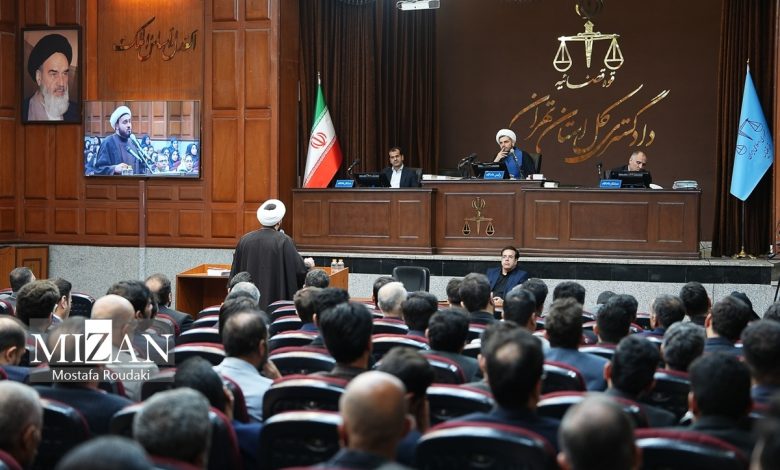
According to Mizan News Agency , the 51st court session investigating the charges against 104 members of the People’s Mojahedin Organization, also known as the MKO, as well as the nature of this organization as a legal entity, was held publicly on Tuesday (January 29, 1404) in Branch 11 of the Criminal Court of a province in Tehran.
Judge Dehghani said at the beginning of the session: The Holy Quran says: Judge, and if you judge, it should be fair between the people; for God loves those who are fair. The Holy Prophet, a mercy to the worlds, says: If the judgment is not fair, then the blessing will leave you. The Commander of the Faithful, peace be upon him, says: The light of the eyes of the rulers is the steadfastness of justice in that land.

He said: “The continuation of the session of the Criminal Court of a province in Tehran will begin under my chairmanship and with the presence of the prosecutor’s representative’s advisors, lawyers, and the plaintiff’s lawyer, to review and hear the indictment received from Tehran regarding the charges related to the terrorist acts of the defendants in the case.”
The judge, at the beginning, stated that he had a speech to the media, esteemed journalists, and representatives of public opinion, and said: “I stood as a reporter and journalist many years ago and became familiar with the truth of how headlines guide public opinion and how an accurate narrative builds social trust. I have lived in editorial offices for years, concerned with news, headlines, and the narrative of reality, and have tasted the taste of concerns, and have closely touched the pressure of public opinion and attacks. It is from this experience that I say: the presence of media members is not only respectable for this judge, but also has deep meanings. From the beginning, this court has considered “publicity” not a ritualistic ceremony, but rather the right of the people and the duty of the justice system. Journalists are not just carriers of news; they are narrators of the truth and keepers of the collective memory of society. What is recorded today with the sincere presence of journalists in the court session will be the standard for history’s judgment tomorrow.”
He continued: The judiciary does not consider itself without this conscious supervision and responsible accompaniment. If justice is implemented in silence, it is incomplete in the conscience of society; and if it is implemented merely for visibility, it is devoid of meaning. The effort of this court is to stand in the middle of these two fields: our peaceful and documented implementation of the law in the light of news. News is a lamp that illuminates the path of justice; it is a bridge between the truth and the conscience of the people, which is seen not only in the court, but also from your perspective and guarantees the health and transparency of the proceedings in the court. For this reason, this court continues to emphasize how journalists can, with a headline, guide public opinion towards a real experience of justice, record it in the historical memory of the people, and instill it in their awakened consciences.
The court, with the help of the media, seeks to discover the provable truth.
Continuing the session, Dehghani emphasized the role of the court and the media in discovering and narrating the truth and stated: “What this court is seeking is the verification of the truth. What journalists today are pursuing, enduring hardships and hardships, is the verifiable truth. The court knows very well that journalists are seeking the verifiable truth, just as this court is seeking the verifiable truth. Although these two are not the same, they are the same path. However, the path of handling this case is both historically and socially sensitive and very risky due to the very serious charges it faces.”
He added: “The court is trying to make a quick, accurate, and fair decision based on the truth, and with the support of caring journalists. I remember when I went through the professional path from reporter to secretary and editor, I experienced a different angle of truth in the media. Journalism means standing on the front lines of the news; where you have to be accurate, act quickly, and remain fair at the same time.”
The judge continued: “Secretaryship and editorial work mean deciding between what can be said and what should be said, all under the pressure of time, competition, frequent calls, and sometimes attacks that are neither professional nor fair. The media space is not just about writing and publishing, it is accompanied by accusations, misunderstandings, hasty judgments, and the pressure of public opinion. I have experienced this not in books, but in practice.”
He noted: “When news is published, it is sometimes judged before it is read and leaves its mark before it is corrected. Therefore, the presence of media members in this court is valuable and respectful to us. I know you have come with a concern for the truth; to record the truth and history after the revolution.”
Referring to the importance of justice, the judge said: “Hidden justice, even if it is accurate, is not complete in the mind of society, and if justice is merely a show, it distances itself from the law and becomes injustice itself. Therefore, the court’s effort is to stand at this point of balance; between the truth that can be narrated and the truth that can be proven.”
He added: “Given the sensitivity of this case, I appreciate the role of journalists in this historical moment. The responsibility you shoulder is a sign of trust in the narrators of the truth, a truth whose impact reaches deep into history and plays a role in shaping the collective memory of the nation. For this, I am sincerely grateful.”
The judge emphasized: “Therefore, we emphasize that the complete reporting of the news is very essential for the audience. I thank all journalists and those concerned about the truth who are working to keep consciences awake.”
Referring to the coincidence of the court session with the 9th of January, he said: “Today, due to the coincidence of this day with the 9th of January, the Day of Insight and the Covenant of the Nation with the Governor, I consider it necessary to remind you that today is not just a day on the calendar, but rather the crystallization point of the insight of the Iranian nation and the manifestation of the public will in defending truth, independence, and justice. The day when the people of this land, regardless of their tendencies and tastes, came to the field to declare that the law is the red line of the nation and that national security will not be the plaything of organized and traitorous currents.”
Dehghani continued: “The court we are speaking about today is not a court of revenge or political settlement, however they may try to imply it. This court is a court investigating charges against the lives of human beings, women, children, and honorable and innocent men of this nation, with charges against the security and will of the nation. The movement that responded to the law today is a movement whose hands have been stained with the blood of thousands of innocent citizens.”
Referring to the epic of 9th of Dey, he stated: 9th of Dey reminds us that insight is the complement of justice; when the nation is aware. The memory of history is strengthened by the pen of concerned journalists, and accusations are not purified by slogans, and justice is not subject to distortion. Today, 9th of Dey is not the end of the road, but a reminder of our constant responsibility to protect truth and justice.
The judge stated: “This court is a narrative of post-revolutionary history and part of that historical memory; a memory that does not allow accusations to be whitewashed in the form of terrorist accusations, even if numerous masks are created for it. We are committed to the law and the rights of the people and are concerned about the rights and unjustly shed blood of the victims.”
Maddah, the lawyer for the complaint, then took the stand and said: Continuing to explain the terrorist crimes of the MKO group, I explained the role of each individual in the previous session. All MKO members, whose leaders are present in the indictment and who constitute the 106 defendants in this case, were all armed at some point in their activities in the MKO terrorist group. According to the admissions of members who left the organization, it has also been explicitly emphasized that no one would leave Ashraf without weapons. These armed actions are completely clear and undeniable. However, to explain the issue from a doctrinal perspective, it must be said that in a major terrorist operation, they themselves announced that they had killed or wounded about 55,000 people.
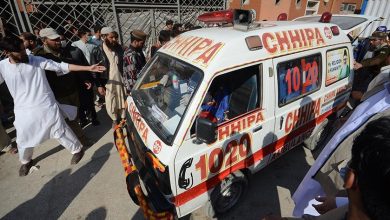
He continued: “Today I intend to examine the material elements of the crime committed by these individuals; the actions they have taken are among the crimes that carry the most severe punishment in all schools and criminal justice systems of the world and are considered unacceptable crimes worldwide. The documentary films that were shown in previous sessions show that the second-degree defendant, the third-degree defendant, and some other defendants were present in the command room and directed the operation. The films that showed their operations showed forces that had entered the country with heavy military equipment. Also, the images that were released from the city of Islamabad and the Islamabad Hospital all indicate the occurrence of these actions.”
He continued: “Witnesses also attended these meetings and testified about Operation Forough Javidan and the crimes committed by the MKOs. Publications and statements attributed to the legal entity of the organization, the first defendant in the case, have also openly and proudly mentioned this massacre and declared that we killed and did well to kill, and if we get our hands on the people of Iran again, we will kill again. The crimes committed by these individuals are very widespread. If I were to mention only the crimes committed in Operation Forough Javidan, there were widespread murders that they themselves have announced killed or wounded more than 55,000 people. Extensive destruction of cities; by their own admission, they have entered the country for more than 150 kilometers and have destroyed and looted every city and village in their path.”
The judge continued: “Sometimes, in a fit of excitement, someone commits murder with a weapon, but here the matter is different. They take the injured person out of the hospital and set him on fire in the hospital yard; they shoot a newborn baby in the arms of its mother in the hospital’s maternity ward; they have carried out widespread kidnappings and have proudly announced that they have taken a large number of Iranian people captive. Burning hospitals, shooting the injured, burning bodies, hanging bodies from lampposts in the streets of the city in order to create widespread intimidation, burning houses and looting people’s property on a large scale – all of these instances have occurred in an organized and coherent manner by a well-organized and coordinated group.”
Maddah, the lawyer, stated: “Before the operation began, a meeting was held with the presence of all members, chaired by Massoud Rajavi, in which the objectives of the attack, the targeted points, the type of military equipment, and the method of carrying out the operation were precisely determined. This operation was planned in advance, and after planning, the division of labor took place, and even the commanders of the axes and units were determined.”
He continued: “The vast majority of the defendants in this case were personally present in the operation, were armed, and carried out military action. In the videos presented, the presence of the second-tier defendant, the third-tier defendant, and some other defendants in the command room is clearly evident; in a way that they also direct the movement of the forces and their advance.”
He divided the participants in the operation into three categories: the main commanders and leaders who had the role of command, guidance, and leadership; middle commanders such as axis, battalion, and brigade commanders; and ordinary armed members who directly supervised the crime.
The lawyer emphasized: In organized crimes, the criminal liability of leaders and commanders is heavier than that of the masterminds of the crime in domestic and international criminal laws in organized crimes; because the provision of equipment, receiving weapons, training of forces, planning operations and field guidance were all carried out by the leaders. Rajavi begged Saddam for three days to receive weapons, and it is obvious that ordinary individuals and members could not have had this meeting with Saddam and carried out this deed. If the follow-ups to receive money and weapons from the Iraqi Baath regime had not been carried out, the ordinary members would not have been able to carry out such an attack.
He noted: “Documents and videos of the operation show that the order to fire was issued directly by Massoud and Maryam Rajavi, and that until this order was issued, the field forces did not take any action; just as at lower levels, the forces did not take action without orders from middle commanders.”
Maddah also stated, citing the material and moral pillars of the crimes of war and corruption on earth, as well as Article 130 of the Islamic Penal Code: If the criminal title of members of a group is war or corruption on earth, this title is also applicable to the leader of the group, even if he did not personally take up arms and did not directly participate in the operation.
Maddah said: “When the title of warlord or corrupter on earth applies to a group of criminals, they are condemned as warlord and corrupter on earth, depending on the case. I would like to explain to you in more detail what happened in Operation Forough Javidan. In fact, this is what happened to the leaders who were in the command room.”
He continued: “We may say that these people themselves did not draw weapons and did not kill anyone in the square, but the crimes were committed by the group members. The crimes were committed in line with the group’s goals. The illegitimate goals that Massoud Rajavi collects for the members before this operation are planned and he invites people to this issue, and all the members are also aware of this issue, and it was not that there was no unity of intent, and the members also commit such crimes.”
Maddah stated: “So the crimes were committed by the members and the crime was committed in line with the group’s goals. It is possible that each member of the group committed a separate crime, killed a member of Jihad al-Sazandegi and hung him on a lamppost, and another member of this criminal group burned the bodies, and another person attacked the hospital and set fire to the battalion, company, and a hospital, and it is possible that each of these members committed different crimes.”
He continued: When the leader does not have an accomplice, meaning that he does not supervise the material operations and execution operations of the crime with other members, according to the legal doctrine, all three opinions regarding Article 130 and regarding the title of leadership, both those who consider leadership as an independent criminal act and those who do not, have agreed that the leader is guilty of the crime of leadership in all crimes in a spiritual multiplicity, which will also be subject to the most severe punishment. What happens as a crime of war, corruption on earth, and rebellion can certainly be assigned to these members who committed these crimes, and in the first way, in terms of leadership and assistance in widespread crimes, these commanders and these officers who were in the command room are responsible, even if they did not draw weapons, even if they themselves did not supervise the crime.
Maddah said: I have a question on behalf of my clients, first of all, now that after 40 years the judicial system has come to the conclusion to hold the trial, for which we are grateful that the trial has finally been held, but my clients expect the diplomatic system and the Ministry of Foreign Affairs to follow up on these cases from international forums. The contradictions of European countries are clear; and this duplicity of their actions in dealing with the people of Iran. These crimes were happening anywhere in the world, according to international law, they are a clear example of war crimes and genocide, and they are a clear example of crimes against humanity.
He stated: “For example, I would like to mention that in international law, the responsibility of the commander is the main one that is accepted. Incidentally, in international law, the responsibility of the commander is considered more than the responsibility of the soldier. The document, Article 28 of the Rome Statute (ICC) of the International Criminal Court, explicitly states in Article 28 that the commander is held responsible in two cases: one is that he had knowledge or was presumed to have knowledge, meaning that he was aware or should have been aware that his subordinates and soldiers were committing such a crime.”
Continuing the court session, Maddah explained the responsibility of commanders in international criminal law and stated: The second form of responsibility is failure to act. What does failure to act mean? It means that the commander was aware that the soldiers or forces under his command were committing a crime, but he did not take any wise and effective action; neither to prevent his forces from committing a crime, nor to prohibit them, nor even to punish the perpetrators. The question is whether such action was taken? No.
He added: In the international criminal law system, two types of responsibility have been defined for leaders and commanders: first, responsibility based on direct orders; meaning that the commander personally issued the order to commit a crime, in which case his responsibility is definitive. Second, responsibility based on control; meaning that the commander typically knows that a crime will occur if he gives such an order to fire, or knows that the forces under his command are committing a crime, but does not take any action to stop or punish them.
The judge said: “In terrorist operations and actions, basically, no action takes place without the order of the perpetrator and commander. The chain of crime in these types of actions defines the main role for the perpetrator and commander.”
He continued with a frank question: “I really have a question. Saddam committed a crime and international courts tried him. ISIS committed a crime and international courts punished its commanders. According to Articles 6, 7, and 8 of the Rome Statute of the International Criminal Court, Saddam was punished for a widespread attack against a civilian population, the systematic killing of civilians, and torture and mass murder. Now my question is, why wasn’t Massoud Rajavi punished? Why didn’t our diplomatic apparatus follow up on this issue? Massoud Rajavi was Saddam’s right-hand man.”
He added: “Saddam’s commanders were punished, ISIS commanders were punished, but Massoud Rajavi and Maryam Qajar Azdanloo, who commanded these massacres, were not only not punished, but remained immune.”
The lawyer said: “I have the newspapers and documents from those years, and the media affiliated with the legal entity, the MKO, has published these. In the publication number 144 of the Union of Muslim Students’ Associations Abroad, from pages 67 to 70 after the Forough Javidan terrorist operation, the legal entity of the MKO explicitly states that we killed and wounded 55,000 Iranians, advanced more than 150 kilometers into Iranian territory, and captured Western Islamabad.”
He continued: “The more painful thing is that the enemy media, including the media of the United States, England, France, and Germany, introduced these actions as a victory for the opposition and the victory of the People’s Mojahedin (MEK). For example, a French news agency published the news “Iranian opposition movement; MEK won” on August 28, 1988, and elsewhere it reported Operation Forough Javidan with the headline “The National Liberation Army advances to a depth of 150 kilometers in Iranian territory” and that 55,000 people were killed and wounded.”
He said: “The media of countries that claim to have accepted international law and say they accept the 15 anti-terrorism conventions, at the same time proudly mention this massacre of the Iranian people.”
He said: The second group of defendants are field commanders; commanders who were responsible at the level of the axis, battalion or specific camps, and the title of war and corruption of the land can be attributed to them and the actions taken by their subordinates; because firstly, these individuals were fully aware of the actions of their subordinates, secondly, they did not impose any prohibitions or restrictions and even issued direct orders for operations and were also supervisors, and thirdly, they entered the country wearing military uniforms and military equipment and armed and committed crimes.
Maddah said: I named some of these defendants in the last meeting; including Mehdi Baraei, defendant number 7 and responsible for the Islamabad-Karand axis, Mahmoud Ataei, defendant number 26 and responsible for the Tehran axis, Mehdi Abrishamchi, his deputy, defendant number 4, Sadegh Darbandi, defendant number 80 and responsible for the POW camp and responsible for the air force, Hassan Nezamal Malaki, defendant number 104 and responsible for the transportation and support of military equipment, who repaired and replaced equipment and vehicles in the event of technical defects and provided them to terrorist forces; also Mahmoud Qajar, defendant number 36, responsible for the military headquarters office, Soheila Sadeq, defendant number 85, Seyyed Majid Seyyed al-Muhaddisdin, defendant number 14 and responsible for the organization’s political department. Other members of the MKO terrorist group have also often been squad commanders, company commanders, or brigade commanders, and all of them are among the defendants in the case; Including Zohreh Akhiani, accused number 5, Fahimeh Arvani, accused number 6, Mojgan Parsaei, accused number 8, Mohammad Ali Tohidi, accused number 10, Ali Khodai-e-Saffat, accused number 11, Mehdi Khodai-e-Saffat, accused number 12, Abbas Ali Davari, accused number 13, Sedighe Hosseini, accused number 15, Mohammad Tariqat Monfared, accused number 16, Mahvash Sepehri, accused number 17, Ghodsi Kharazian, accused number 18, Mahnaz Salimi, accused number 19, Mohsen Siahkola, accused number 20, Beheshte Shadro, accused number 22, Abolghasem Rezaei, accused number 24, Humaira Hojjati, accused number 25, Morteza Esmailian, accused number 29, Zahra Bakhshaei, accused number 31, Niko Khaefi, accused number 33, Ozra Alavi, accused number 34. These individuals were brigade commanders in Operation Forough Javidan and can be said to have been the masterminds of the crimes that were committed against the people of Iran.
He said: It may be claimed that these individuals, other than the main leaders, namely Masoud Rajavi, the first defendant, and Maryam, the third defendant, are not criminally liable or that their liability is waived because they acted on the “order of the superior.” However, this claim is in no way considered a reason for waiving criminal liability; because first, the order of the superior must be legal and be directed towards a legitimate and legal purpose, and second, if the order is less than coercion, it basically does not meet the necessary legal conditions. None of the members of the MKO, the defendants in the case, can claim that they were suspicious or acted illegally due to ignorance and want to be exempted from criminal liability under the title of the order of the superior.
Continuing the meeting, the lawyer representing the case, referring to the preliminary summary meeting of this operation, explained new dimensions of the goals and nature of the measures taken.
According to him, this meeting was held in the presence of Massoud Rajavi, Maryam Qajar, and a large number of forces from the so-called “Liberation Army”, and operational goals were clearly announced.
He added: “In this meeting, Massoud Rajavi clearly states the ultimate goal of the operation to capture Tehran and explains the route through various cities. It is also clarified that in the event of any opposition, the forces are ordered to kill and pass through people without consideration.”
He continued: “Orders such as attacking medical centers, burning hospitals, burning bodies, and committing war crimes were raised in this meeting, which are completely unacceptable from a legal and humanitarian perspective. Given the clarity of these orders, none of the members can claim to be unaware of or have doubts about the objectives of the operation.”
Referring to the rules of domestic criminal law, Maddah said: According to Article 375 of the Islamic Penal Code approved in 2013, coercion in ordering murder is not accepted. If someone commits murder under orders, the handler is subject to retribution according to the law, and the individual faces a life sentence. Therefore, especially the defendants who were in the command ranks, cannot claim that they did not intend to commit mass murder and kill and injure 55,000 or that they were unaware of the results of the operation.
Citing Article 290, Paragraphs (b) and (d), he explained: In cases where the act is typically lethal, even without direct intent, criminal liability is realized. The use of weapons of war such as missiles, mortars, tanks, and heavy weapons against people, and attacks on civilians and the disabled, are clear examples of typically lethal acts. Attacks on hospitals and defenseless people, such as women who have given birth or elderly people who are hospitalized, indicate the perpetrators’ awareness and knowledge of the consequences of the acts committed. This is quite evident and no one can deny it.
He continued by referring to the claims of some defendants that the purpose of the operation was political, saying: “Even if it is claimed that the purpose was to confront the political system and not the people, this defense is not legally acceptable.”
The lawyer, citing international law, stated: “The principle of precedence, the nature of the act governs the motive. Crimes such as massacre, torture, kidnapping, attacks on hospitals, schools, and the helpless and defenseless, are considered among the worst inhumane acts and the most severe crimes in all legal systems in the world. In every legal school and penal system in the world, these people are subject to the most severe punishment.”
According to him, the jurisprudence of international courts, including the International Criminal Court (ICC), the International Criminal Tribunal for Rwanda (ICTR), and the International Criminal Tribunal for the Former Yugoslavia (ICTY), also shows that simply claiming that the target is political is never accepted as a defense, meaning that political motivation cannot be a license to commit crimes against civilians.
Maddah said: “We can confront politically and commit political crimes, but we are not going to commit mass murder and attack a hospital, and we are not going to commit heinous murder.” In this regard, as well as the legal factor, Article 33 of the Statute of the International Criminal Court explicitly acknowledges again and again that if members commit a crime and claim that this crime was on the orders of our commander, this does not absolve the members of responsibility, because these crimes are so clear and so obvious that any reasonable person knows that this is a crime and should not be committed.
He continued: “Therefore, I ask the court to attribute the crime of corruption and war on behalf of my clients to all the leaders and members of the terrorist group of the Hypocrites, who are the defendants in the case. I also request that the diplomatic authorities follow up on this issue so that their crimes are raised in international courts and, God willing, justice will bring a gift to the Iranian people, which is nothing other than the punishment of these corruptors and these murderers of the Iranian people.”
Maddah said: If you allow me, there are witnesses present in the meeting to testify about the Forough Javidan operation and the crimes committed by the terrorist group of the MKO. I would like to invite them to testify. Hamed Sarafpour should come to the stand to testify.
The judge said: “According to the bill you submitted to the court, you stated that some witnesses should not have their images released due to certain witness protection rules. Did this witness also make the same request?”
Maddah: Yes.
The judge said: “The cameras should be very careful not to publish the witness’s photo. In order to comply with the witness protection law, they should not publish any images of him.”
Hamed Sarafpour appeared on the stand as a witness and after taking the oath, he stated, referring to his motive for appearing in court: “I have no specialized knowledge of legal terminology and I have only come to state what I have seen myself in the MEK and the events that occurred there, as well as the reasons for my separation from the organization. I think an important part of this material is related to how the organization recruited people, what happened within it, and how it suppressed people who protested or wanted to secede.”
He continued: “The MEK is not only known externally for the terrorist operations and wars it waged, but also for its very violent behavior within itself. Massoud Rajavi severely suppressed forces that wanted to secede or protest, from all kinds of mental and physical torture to secret prisons. The purpose of these measures was to force individuals to participate in the wars and actions he wanted, that is, in the crimes that the organization’s leadership intended.”
The witness added: “Anyone who wanted secession or opposed the operations and armed conflict was severely repressed. These repressions caused many people, both young and old, to give up protesting or secession. I have seen these things firsthand. We were practically forced to stay in this space.”
Sarafpour said: “The next point is that the MEK organization is not like a government or a state with different ideas and currents. The organization is a closed structure. All the people around the leadership of the organization, that is, the MEK leadership, have a role, and everyone is subordinate to the same structure in carrying out every move, whether it is support, propaganda headquarters, or other actions.”
He continued: “I joined the organization for 25 years, from the age of 14 to 38, and was completely subjected to organizational and ideological teachings. One of the clearest examples of these teachings was the indoctrination of children and adolescents into violence. I myself became familiar with this environment from the second grade of middle school.”
Hamed Sarafpour, a witness, said: “Since 1979, when I was in the third grade, I noticed that my best friends and I were also attending Quran class, because the Mojahedin Organization was laying hands on religious people. I joined the student organization with my student brothers. Of course, I was a student, so I did this to join the organization. To participate in social activities. My first activity was selling magazines until it expanded.”
He said: “From the beginning of high school, they organized me into the organization and made me a team member, and from that moment on, I participated in various activities such as wall writing, slogan writing, magazine sales, and fundraising for the organization.”
Hamed Sarafpour, a witness, said: “One of the issues we should pay attention to is how the organization put us in a fundamental conflict with the organization. The organization was insinuating to us that Ayatollah Beheshti had a secret relationship with a CIA agent and was planning to bring Iran back into the arms of America. In this way, they were attracting us because we had a revolutionary and anti-American spirit. First, the officials of the Islamic Republic Party, whose secretary was Ayatollah Beheshti and Ayatollah Khamenei was also a member. At first, they made us enemies with them and at that time they did not incite us against Imam Khomeini (RA), because they knew that we were interested in him.”
He said: “I was attracted to the organization after my childhood. Although I was free, I lacked sufficient awareness. At that time, the organization was socially popular and fought against the Shah. It chanted slogans of fighting imperialism, establishing freedom, and social justice. These slogans were exactly in line with the goals of the Islamic Revolution. On the surface, we were not considered counter-revolutionary. The high-ranking members of the organization appeared to be believers and revolutionaries who believed in the path of Imam Hussein (AS) and the Master of the Pious.”
The witness said: “A single line of the slogan ‘Forward to a Monotheistic Society’ was emblazoned on the militia flag, evoking the ideal society of the Imam of the time, which provided the greatest motivation and enthusiasm for struggle.”
He said: “This militia was established from the beginning, it was supposed to be in the fight against imperialism. That is, right at the same time that the Imam ordered the formation of the Basij of the Oppressed, Massoud Rajavi ordered the formation of the militia; in the name of wanting to fight imperialism. But he diverted this militia from the fight against imperialism to the fight against the republic.”
Hamed Sarafpour, a witness, said: At that time, they told us that the MEK organization was your first priority. In any case, from Nowruz 1360, they put us in another phase. A phase that was practically a conflict between the militias; on the one hand, they were inciting the Basij and the Republican Party on the other. The organization’s official at the time said that the IRGC had increased the pressure on the organization in the northern provinces and several people were martyred, so we must do something to reduce the pressure on you and shift some of the IRGC’s focus to the south, and we must be prepared for conflict and martyrdom.
Continuing his testimony about the organization’s role in armed actions and his personal experience, Hamed Sarafpour said: “We started a series of activities in schools. Initially, this path began with writing slogans, selling magazines, and activities in classrooms, and gradually spread to the streets. These actions caused a lot of tension in schools and the city over the course of a few days, leading to the closure of schools, street riots, the closure of shops, and the injury of a number of compatriots. At that time, we were 12 to 16 years old and we participated in these clashes.
He continued: “These tensions continued until June 20th, and then on June 20th, we entered the military phase; that is, the organization issued an order for armed demonstrations without the knowledge of the militia, which we were. This was the largest demonstration in Tehran, with between 300,000 and 500,000 people participating. Many members of the Mujahedin, without knowing it, engaged in killing and slaughter operations, and we unintentionally entered into armed conflict, and many were killed.”
The witness added: “After that, the crowd dispersed, some were killed, and some who were from other cities left Tehran and communications were cut off. From that point on, for about five years, events occurred that led to my transfer to Pakistan and I was planning to go to America to study, but events occurred in Pakistan that made me reconnect with the organization. At that time, a member of the Mujahideen organization in the asylum office told me that my brother had been killed in 1960, while he was not a member of any political group. This matter deeply troubled my conscience and caused me to remain within the organization and participate in all its activities.”
Sarafpour said: “I participated in all the operations at that time, especially Aftab, Chalcheragh, and Forough Javidan. Operation Aftab was in the Fakah region, and Mohammad Hayati was the commander of the Hanif headquarters, and the other members were Parviz Karimian, the commander of one of the battalions, and Ali Khodayisfat was the commander of our battalion.”
Hamed Sarafpour, an eyewitness, said: “These names were in charge of the command of Operation Aftab, in which we entered the depths of Fakah, some were martyred and some were captured. In Operation Chalcheragh, our brigade was also commanded by Fatemeh Ramezani. I don’t remember exactly who the commander of our flanking brigade was with, but Masoud Rajavi and Maryam Rajavi were the main commanders of all operations and issued the order to fire.”
He added: “There was another brigade with Fatemeh Tahouri whose mission was to capture Mehran. Mehran was not a residential city, it was a war city, but I was in the southern heights and was injured in a clash with military forces. Our unit commander was Yousef Pournabi, who was killed. Karim Gorgan was also one of our other commanders who was seriously injured.”
This eyewitness continued: In Operation Forough Javdan, I was the commander of Kaskavul, but I had not received any training. The commander of our brigade (Brigade 910) was Fatemeh Ramezani and the commander of the axis Mahmoud Ataei, and our goal was to conquer Tehran. The deputy of the brigade was Nahid Sahra? who was killed in the same operation. Vahid Asadi Taghi, who had not received any training and came from abroad, was also responsible. He left the organization after the ideological revolution and lives abroad.
He said: “In our brigade, because Fatemeh Ramezani was previously responsible for political affairs and lived in the United States, many foreign and non-Iranian forces were deployed in our brigade. None of them had been trained and were used in operations with only shooting training. A large number of soldiers who had been captured in previous operations were also used in operations Aftab and Chalcheragh. We had an Iranian soldier who was told that he would be released after the operation, this person was also put on a tank without training and was the tank driver.”
Hamed Sarafpour said: “I saw Mohammad Ata’i, who was in charge of the axis there. In the MEK, it was said that the MEK is meaningless without weapons and that weapons are their honor; therefore, everything was defined based on armed struggle.”
He said: “The conditions for membership in the Mujahedin organization were belief in armed struggle, acceptance of their alleged motto and statute, and declaration of conscious adherence to the strategy of the Liberation Army. Organizational readiness, absolute organizational obedience, military obedience, opposition to any opposition, and even acceptance of martyrdom and professionalism were among the requirements. In other words, the individual had to carry out whatever he was ordered to do without question.”
Sarafpour said: In the “Theory of Maryam’s Revolution,” which was proposed by Massoud Rajavi in the meetings of the Bagherzadeh headquarters in 1992, the organizational red line was defined for the Mujahideen. He had clearly stated that we do not have a Mujahideen without religious rituals and prayers, we do not have a Mujahideen who is sick, retired, or on the sidelines. They also officially said that no one, even a sick person, should be excluded from organizational meetings and orders. I once suffered from a herniated disc; despite severe pain, they would forcefully and threateningly drag me to meetings. I also have a report from my wife that she also escaped from there. Despite her illness, she was also forcibly taken to meetings. In those meetings, heavy pressure was put on individuals to prepare to fight against their country and people or to accept operations such as mortar shelling.
He said: “Anyone who committed the slightest transgression, or attempted to secede, or even protested and simply asked a question, such as why the armed struggle continued after the ceasefire, would face harsh treatment. From that time on, the main stage has just begun. From that period onwards, the repression became severe.”
This witness said: In the winter of 1974, the greatest internal repression began by Massoud Rajavi. That same year, due to the increase in recruitment into the MEK and based on the same path through which I had been recruited, I came to the conclusion that the organization had completely changed direction and was doing things that had nothing to do with its original beliefs.
He added: In the fall of 1974, I handed over a written request to Ruqyeh Abbasi to leave and said that I no longer wanted to be a member of the organization and that I wanted to be like a supporter, and she replied that she would follow up. Two months later, Massoud Rajavi held a long meeting of about 10 days that divided the entire Mojahedin organization into four parts. Each time, these meetings were held in the Baharestan Hall in Baghdad, which was known as the meetings of the National Council of Resistance. He severely tried and suppressed all the people like me who had requested it, in a group of several hundred people. For the first time, it was publicly shouted that no one dared to say the slightest word against the Liberation Army.
The witness continued: At the same time, Massoud Rajavi tried all the forces for 40 days and forced them all to surrender en masse. He officially announced there that from now on, anyone who requests separation must be imprisoned for two years in the organization’s relations so that their information is burned, so to speak. Then they will be illegally handed over to Iraqi intelligence and held in Iraqi prisons for eight years, and if they survive after that, they will be handed over to the regime and executed.
He emphasized: “These words were officially announced in front of several hundred people. After that, he said that we do not have a country abroad, we do not send anyone abroad, we take anyone who requests separation to the border and they are released there. Later, we learned that the issue of imprisoning and torturing people was completely real and several people were harmed in this way, and those who said they would take us to the border were taken to prison.”
This witness said: All these measures were to prevent the forces from separating and the loss of forces from occurring, because if there were a loss, the Liberation Army would no longer be able to carry out terrorist operations. This internal repression was precisely to prevent the forces from complaining against the establishment and the individuals of Massoud Rajavi, Maryam Rajavi, and other officials. These issues are not separate and are all part of this complaint.
He added: “After this, the repression intensified continuously until 1980. Even until the main structure of the organization collapsed in the early 1980s, these pressures continued. The situation reached a point where many people committed suicide. In 1979, cases of stroke and sudden death had increased sharply.
He said: “There were examples of suicides and institutional pressures that I have already mentioned.”
He added: In 2002, I spoke in front of about 300 people at one of the meetings and protested why sick people were also forced to attend the meetings. Those who criticized were beaten, and at the same time, I myself was one of them. The camp doctor had told me that I should rest for at least two weeks because my physical condition was not good. However, the head of the center, who was Berenji, and his deputy for operations, Reza Shirmohammadi, had ordered that I be taken out of the sanatorium and taken to the meeting on the first day. In those meetings, I was met with threats, severe psychological pressure, and coercion, so that the person could not object. Another case was forced labor. This pressure and behavior ultimately brought me to a point where, about eight months later, I was forced to decide to distance myself from the organization and officials of the MEK and not continue.
Sarafpour said: “They said you had to work and if you died, we would say you were a martyr. They said strange crimes were happening in this organization that no one could believe what had happened and what crimes had been committed, even to this day, even in Albania. Anyway, with all the meetings I was there until Saddam was overthrown, until the last moments I still didn’t think that it was Massoud and Maryam who were causing this disaster to happen to us. I thought that, for example, some officials were putting pressure on me, and I still loved them.”
This witness said: When I fled Ashraf because we had no place to stay, I was with them for a while, and their nature is different from the Mujahideen, and I have not seen the repression that I felt in the Mujahideen in any other group. It was said that the Liberation Army was Saddam’s army; I once went to the transportation headquarters to escort cars that went to refineries and silos to bring goods.
He said: “The person in charge of the escort department was Sirus Fathi. He once justified us by saying that Saddam was with us and the Iraqi government, and he presented several principles of reasoning, one of which was the principle of reasoning and the other was the principle of the army, and he said that Saddam considers us part of his army. For this reason, he gives us everything he gives to his army.”
Hamed Sarafpour, a witness, said: “It was the winter of 2002 when they gathered us from different camps and held a meeting they called the Great Avalanche and said that the US attack was certain and that the US would definitely attack next Avalanche. We must be ready for war again, so that if one of the US missiles intentionally or accidentally hits one of the Mojahedin camps, we will advance towards Iran and we must reach Tehran by any means necessary.”
He said: “Maryam asked me to go to Tehran with one of the tanks and be with the troops, and after the successful entry of the Liberation Army, I would also arrive in Tehran.” One of the tanks was also named after Maryam, but in any case, the US attacked and Saddam fell.
Hamed Sarafpour said: “After Saddam fell, the Americans surrounded Camp Ashraf. Then news came that was announced in the form of an announcement in the restaurants. In it, Massoud Rajavi asked the French government in a statement to protect Maryam Rajavi’s life, and there we learned that Maryam had been sent abroad in advance and that all the forces were going to be sent forward to be killed. Later, Mehdi Samee, a member of the National Council of Resistance, admitted that they were sure that 90 percent of the Liberation Army would be killed in the American attack and had already obtained passports for the 10 percent who were themselves to prepare to flee Iraq, and only Maryam left the distance that the Liberation Army was controlled until the last attack in 2013.”
He added: “If we look, during August 2009, April 2010, and until September 2013, various conflicts occurred that Massoud Rajavi directly created, and many members of the Mujahedin were killed. Even in one of these conflicts, 40 members of the organization lost their lives. In one of the meetings, he announced that even if 400 people were killed, I would be happy because the name of the Mujahedin would be mentioned again in the world.”
Sarafpour continued: “A year after the fall of Saddam, I and a number of friends decided to flee the organization. This happened on July 12 or 13, 2004, and we went to the American camp and stayed there for a few years, and the Mujahedin told them that those who fled were against our friendship with you. Before that, the pressure and harassment from some commanders of the organization was intense. One of the American commanders told us that the Mujahedin were helping us and giving us information that we needed.
He added: “After the fall of Saddam and the end of the war, Massoud Rajavi colluded with the Americans and signed an intelligence and security agreement. Massoud Rajavi issued a statement and officially announced that from now on we have an intelligence and security agreement with the Americans, we will give Iranian information to the Americans and they will protect us. These actions were completely similar to what he did with Saddam.”
This witness stated: In one of the meetings, Massoud Rajavi quoted Saddam as saying that an Iraqi officer told Saddam that the Mujahedin had not given us the information we asked for about the Iranian army, and Saddam had said that they were more reliable because they did not give us information about their own country. We really thought that the organization was independent and that Rajavi would not give Iraq any information about Iranian military intelligence. But after I escaped, when I saw films and documents of meetings, the exchange of money, and the delivery of information by Abbas Davari to Iraqi intelligence, it was unbelievable at first.
Hamed Sarafpour continued: “Rajavi had such an impact on us that we believed everything he said was true and in fact, we considered him the replacement of the Imam of the Time on earth and nothing about him could be doubted or denied. Now some later and some earlier understood what had happened. From the moment they took me, they said you were an influencer of the Islamic Republic. Some time before the fall, during the last crackdown, they told me that you had to confess. They put all the critical reports of me in front of me and said you wanted to hand these over to the regime and you have to confess here that you were a mercenary of the regime and an influencer of the regime within the relations.”
He said: In the spring of 1987, during a patrol operation that had not yet been carried out, Massoud Rajavi told us: “Look, if you take a prisoner, a prisoner is like family.” I remember one of the children was disarmed in an operation, but then in Operation Forough Javidan, the same person returned with his eyes and hands tied. Later, I only realized that these words were used as a tool. All of these were a series of things that they did one by one. Look, these are Jamal Azimi’s memories of the tortures he himself experienced. Jamal Azimi is now in England and still opposes the Islamic Republic, but he had written a report about the tortures he had seen in 1994. They also told him that he was an infiltrator, they beat him, and he witnessed many other tortures.
Hamed Sarafpour said: “In the MEK, each person had a weapon registered in their name. I had a Kalashnikov that I carried with me everywhere. I was in the political headquarters and research department for a while, and in 1980, before the Persian Gulf War, I was in the security department of Massoud Rajavi’s headquarters for a few months. Everyone is known by their weapon, meaning that in the higher ranks, people even had weapons like Colts that belonged to them, and as soon as they entered Iraq, they would take them with them.
He continued by mentioning the organization’s activities in European countries: “Regarding European countries, especially France, I must say that I have personally been active there. During this time, we repeatedly approached French security officials and various human rights associations and warned them about the activities of the MEK, and told them that you are placing restrictions on us in France and Europe. At the same time, Maryam Rajavi, who was the leader of the organization, easily did everything and supported it, but she was placing us under control and restrictions.”
The witness added: “Daniel Mitral was one of the main supporters of the Mujahedin and supported him as long as he was alive. He even had a good relationship with Rajavi’s wife and supported her.”
Hamed Sarafpour, a witness, said: “My wife is Zahra Mirbagheri, who attempted to escape from the headquarters of the MEK four times, succeeding the fourth time. She was the first person to reveal the list of 105 women who were mutilated by Dr. Moghiseh in the MEK on the orders of Maryam Rajavi.”
He continued: “My wife was also among those who were tortured in the organization. The torturer was Eshrat (Faera) Mohammadkar. I will read a few sentences from my wife’s statements about the torture she suffered: Faera Khanum, do you remember me? I am Zahra Mirbagheri. With the handwriting of Massoud Rajavi, the one we called ourselves, do you remember what you did to me?”
Hamed Sarafpour, a witness, said: “Madam, you killed an innocent 26-year-old girl named Marjan Akbari. This was done by the sect’s torture apparatus with the advice of your Excellency and under the supervision of Mojgan Parsai, Massoud Rajavi’s successor in Ashraf. If this innocent girl was killed and she is not here to testify, then Massoud and Maryam Rajavi should be told, for what crime was Ms. Akbari killed? If she is not here now, I am ready to testify in any court.”
He said: One day during the holy month of Ramadan, after breaking the fast, Faezeh, on the orders of Massoud Rajavi, held a meeting of 150 people at the headquarters of the Interior Ministry, which was headed by Zohreh Ghaemi. At that time, due to the continuous repression in different headquarters, some people were sick in different headquarters of the Ashraf barracks. They were informed that they should participate in the front? But I refused to attend. Faezeh Mohammadkar ordered 6 women to bring these people to the meeting by any means. I had hidden myself in a corner of the dormitory, but the women found me.
Sarafpour said: “They forced me into an army uniform and dragged me to the ground. I was shocked by their cruelty and resisted. Although my left eardrum had ruptured and was severely infected due to the oppressors’ behavior, they refused to send me to a doctor and prescribe me medicine.”
He said: “Zohreh Ghaemi sent me a message on behalf of Fatima Hamedani saying that you must die, and through this, they issued my death sentence.”
The judge said: “Your wife, who wrote these things, is coming to court to raise these same issues?”
Sarafpour said: “My wife is not in Iran and for some reason she cannot attend court sessions even online.”
The judge said: “The plaintiff’s lawyer should be able to speak to him and if the court deems it appropriate for them to be present at the hearings, they are required to be present in Iran. Among the separated members are a number of women who wish to testify. Is your wife willing to testify?”
Sarafpour said: “Not yet, but maybe they will be satisfied in the future.”
Maddah appeared on the stage and said: “There are several questions. The first question is whether the members took action regarding the fact that it was an armed war or not and whether everyone was armed or not. The second question is that, considering that they were in Europe and provided evidence, whether European countries such as France, England, and Germany supported this terrorist group, the MKO, or not, and if they have information, they should explain.”
Sarafpour continued in response: “When I say they are a body, I mean that this organization is a complete organism; unlike a government or regime that has different factions and parties, the MEK is completely centralized and everyone must carry out the orders of their leader; therefore, whatever happens is what Massoud and Maryam have ordered and has been around the decision-making apparatus of the organization. If I do something, what the leader has said will be carried out and it is not possible to act against the order. In other words, the members act like the muscles of a body. Since everyone believes and believes, they carry out the orders of their ideological leader, Massoud and Maryam, and the Leadership Council.”
He said: The Mujahideen organization operates based on information, competence, and necessity; that is, any information must be both competent and necessary for members to be informed. In the Mujahideen organization, as previously stated, weapons are part of the Mujahideen identity. A Mujahideen cannot separate his weapon from himself and consider himself a Mujahideen. Having weapons and being a Mujahideen are related, and this is part of the absolute teachings of the organization. For this reason, when we were disarmed, we had a lot of contradictions and inconsistencies. Massoud gave the message that he took up the weapons to protect the forces, but this was said as an excuse. In fact, he was trying to convince people that he did this to protect the forces, but these actions caused major clashes and the loss of several lives.
He added: “All this time, European governments have been specifically supporting the organization. They even protected them during their travels. Right now, the mayor of the region where they are based in France is supporting them. They are also present at the parliamentary level. They also have many supporters in the US Parliament, because the Mujahedin invest money in elections, provide financial assistance, and support them politically and in terms of propaganda.”
Sarafpour said: “A large part of the names on this list were members of the political bureau, but from the day Maryam married Massoud, the organization’s apparatus was completely transformed. It was announced that an ideological revolution had taken place, meaning that Maryam, as a so-called liberated woman, divorced her husband and achieved liberation, and accepted Massoud not as a political leader, but as an ideological leader.”
He added: “This marriage caused a revolution within the organization, from then on, Massoud and Maryam Rajavi were introduced as ideological leaders. The previous structures were effectively dissolved, and executive boards were formed in which people accepted Massoud as the first ideological leader. From then on, the main decision-making was with Massoud and Maryam.”
The witness continued: Around them was the executive board and the political office, which had an advisory role. These people made suggestions, conveyed opinions, and carried out executive work, but the final verdict, order, and decision-making was with Massoud and Maryam. The final conclusion was ultimately made with their approval, and then it entered the implementation phase. The executive board conveyed the lines and lines, and finally Massoud approved, and they all worked together; the final opinion was with Massoud and Maryam, and the rest only conveyed suggestions and opinions.
Sarafpour stated: “In the structure of the organization, decision-making could have been done by a group of people, a group of old people of the MEK who were members from the early years and later worked in the form of a leadership council. Although these people were considered an executive board, they simply put forward their suggestions and opinions, and these suggestions were passed on to the leaders.”
He emphasized: “Although decision-making belonged to the group, the final decision-making was the responsibility of Masoud and Maryam. No decision was implemented without the approval of the first person in charge. The second and third-ranking individuals basically had no access to the final decision-making.”
Alone, the lawyer for the defendants in the case asked the witness whether lower-ranking individuals could independently decide to carry out a terrorist act? Did they have the authority to carry out small or large operations, such as the Chelcheragh and Mersad operations? Or were such decisions made solely at the leadership level and communicated to the body?
Tanayeh, the defendants’ lawyer, said: “It seems that the atmosphere is such that instead of addressing the organization, its text, and its leadership, individuals are raising the issue in a different way. We are not defending the crime, we are defending the law.”
The defendants’ lawyer asked Sarafpour whether he had been prosecuted in Iran or another country for his membership in the organization before his separation.
He said: “No, I escaped from the organization myself, I found out about this.” It was announced that the leadership of the Islamic Republic had considered amnesty for all those who were members of the organization but left, of course, a certain number who did not play a key role. This was at a time when many other people had escaped like me. The Islamic Republic has granted amnesty to those who did not have private complainants.
In response to the defendants’ lawyer’s question, he said: “I have been in the organization since 1989, when Maryam’s ideological revolution began, and in 2004, I escaped. I was a member of the organization. In some of the operations I mentioned, for example, Forough Javidan, I was the tank commander, and after that, at times, I performed executive work in the propaganda headquarters, the political headquarters, and in some departments. For example, I worked in the propaganda headquarters in the field of filming, editing, and related work.”
The witness added: “I was at the station for a while, checking the vehicles that were traveling to Baghdad. I was also in the telecommunications department for a while, doing wireless work and communications; or I was an operator and talking on the wireless, and I was in the reconnaissance department for a while, doing classic reconnaissance. After the time when there were no more classic operations, that is, when operations inside the country had become terroristic, we were operating as a ready unit that was supposed to be present in the overthrow operation.”
He continued: “After that, I was a motor officer, an administrator, or in charge of the weapons depot, and I did various support tasks. The last time America attacked, I was the commander of a BMP-1 (armored personnel carrier).
Alone, the lawyer for the defendants in the case asked him: Did you also work for an organization outside Ashraf?
This witness replied: No.
The defendants’ lawyer continued to ask: “Were you aware of the organization’s structure and hierarchy?”
He replied: “The MKO organization was very secretive and not much information came out of it. Their organization was constantly changing so that if someone didn’t leave, they wouldn’t be able to get accurate information out of the organization, so we weren’t very aware of this hierarchy.”
Tanay asked: Who made the decisions that were made in the organization and who was involved in these decisions?
He replied: Before 1985, the Mojahedin Organization, like other organizations and parties, had a hierarchy, a responsible position, and a political office.
Sarafpour said: “Massoud Rajavi had formed various commands. He had given the commander of each of these bases a certain amount of decision-making authority.”
The judge said: “The person who makes the decision must also have the power to execute it, and given that these people were from different circles. For example, were these decisions they were making for an operation like the chandelier?”
Sarafpour said: “Massoud and Maryam Rajavi made the decisions for the operations of Chalcheragh, Forough and Aftab, but before that, everyone had an area and the commander of that base decided what to do based on the reconnaissance. From 1997 onwards, Mahvash Sepehri controlled everything and gave the final opinion. The leader of the organization would give the line that, for example, now is the time to carry out the operation, and then the actions would be carried out by other members.”
He said: “Maryam was brought from France in 1975 to take charge of a series of operations called the opening of the dawn, and operations 1 to 4 were carried out. The other stages were not carried out. She made a new organization and appointed someone responsible for each task to carry out the operations in her area.”
The judge said: “A crowd was involved in these decision-making processes. For example, maybe 50 people were involved in making a decision. 50 people tried to make something happen.”
Judge Dehghani also said: “Was it possible that these 104 people wanted to oppose the ideas and decisions? Or were they themselves involved in making and implementing these decisions?”
This witness stated: “Massoud Rajavi left the organization at some point due to some problems. The members of the organization’s central cadre were the last people in the organization and they completely agreed with Masoud. The organization’s directors and hierarchy changed almost every year so that information from it would not leak out.”
He added: “After the urban armed wars that began under the guise of a change in strategy, opponents of Massoud Rajavi, even those who were number two or three in the organization, were sidelined and put on trial. I witnessed people who were previously the commander of the axis, the commander of the headquarters, or important members of the organization step down, and eventually only people who were very sincere and accepted Massoud remained. In one example, Karim Gorgan, who was the deputy commander of the battalion, was suddenly dismissed from his position and was assigned to support duties. This person apologized for his positions several times and it took 3 years for him to return to his previous position.”
He said: “I was in the support team during Operation Aftab. For example, two battalions would go forward and if needed, we would go forward to support and back them.”
The martyr’s daughter called for retribution from members of the Mojahedin Organization, emphasizing that this demand was the desire of all family members.
He said in his statement: “My father was targeted during an attack on an ambulance while he was rescuing the wounded, caught fire, and attained the highest degree of martyrdom. I have seen the images of the moments of my father’s martyrdom, and our family is determined to get what is right through the legal process.”
Continuing the session, the judge in the case, emphasizing compliance with legal standards, announced: “The court will fully reflect the requests and demands of the martyrs’ families and take them into consideration in the proceedings.”
Then, the wife of martyr Mohammad Ali Baraghi appeared in court via electronic communication and online and said: “My husband was a mechanic and helped the fighters during the war. He was martyred on August 20, 2018, while I had given birth on August 25, and my second child was only 5 days old. I ask you to avenge my husband’s blood and the injustice done to me and my children by the hypocrites.”
He added: “Even though my wife knew that the situation on the front was very dangerous, she loved life and loved my eldest daughter very much. Who is responsible for our mental trauma? My 3-year-old daughter kept hiding in the basement after her father was martyred. I am 58 years old, and my children and I suffered from mental illnesses due to the pressure and mental suffering caused by my wife’s martyrdom. I am asking the court to take retribution for the perpetrators and instigators of my wife’s martyrdom.”
The judge asked: How old was your wife at the time? And how did she become a martyr?
He said: “They were 28 years old. Some said they were in a sugar factory, and some said they were in Islamabad Hospital and then they were injured, and it was as if they were going to set them on fire. My sister did not allow me to see my husband’s face for the last time. Without a bath or shroud, and with the same clothes they were wearing, they were unrecognizable in the bathroom.”
Another witness said in an online conversation: “I am the son of martyr Jahangard Amiri. He was the commander of the 81st Armored Division in Kermanshah and was arrested in Operation Mersad along with a number of soldiers and was martyred a few months later as a result of torture in Iraq. At the time of my father’s martyrdom, I was three years old and I have a younger brother who was 11 months old.”
The judge said, “Are your mother and brother alive? Don’t they have any complaints?”
The martyr’s son said: “Yes. I am filing a complaint on behalf of my mother and brother.”
The judge said: Do you know how your father was martyred?
He said: Yes, because some of their soldiers returned to the country after enduring captivity and raised some points, and a report was given to us by the Red Cross at that time that their kidneys were failing due to torture, and due to the lack of medical facilities and doctors, they were martyred and buried there. In 2002, they handed over a number of bodies to Iran, one of which was the body of my martyred father. One of my father’s friends said that he even asked for water in his last moments, but they did not give him any.
The judge said: “Do you have any demands for retribution, damages, and blood money?”
He said: “Yes, absolutely. We want our legal rights to be paid.”
The judge said: Who are you complaining against?
He said: “I have a complaint against the hypocrites.”
The brother of martyr Yahya Amiri said: “The martyr was 20 years old when he was martyred. We demand retribution and compensation. He was present as a soldier on the day of the incident and was an ambulance driver.”
Martyr Amiri’s brother said: “The martyr was martyred in Operation Mersad at the age of 15. All family members have the right to complain, demand compensation, and seek justice.”
The father of martyr Shairi said in court: “I am fully aware of the nature of my son’s martyrdom. We ask you to take the rights of the martyrs and their families from these criminals. These criminals must be retaliated against.”
Hamid Jokar, a defected member of the People’s Mojahedin Organization, appeared in court as a witness and introduced himself after taking the oath and said: “I was a conscript soldier of the 64th Division of Urmia and was captured by the MKO in 1987. At that time, I was 18 years old and had served for about 20 months. I was captured by the MKO army with a number of comrades. After being captured, I was held for several years in what was called the Liberation Army and was forcibly present in the organization. I will present some of my observations to the court.”
He continued by referring to the events in the field and said: “In the scenes I witnessed, strict and harsh rules prevailed. Anyone who raised their hand or resisted was forced to carry out the orders. In some cases, it was even said that the ambulance should not transport the injured. We were Persian-speaking, and during the captivity, when they spoke Persian, I was surprised and taken aback. When I asked them who they were, they said we were the Liberation Army, but they ordered them to tie their heads from behind and beat them. One person resisted strongly and said this was my last night as a soldier, but the Mujahedin commander ordered that if he did not allow them to tie his hands from behind, he would be beaten. When he resisted too much, one of the MKOs shot him in the stomach.”
The witness added: “Then they ordered not to leave the wounded. It was clearly stated that no wounded person should be transferred and should be killed. I saw these scenes with my own eyes. One of my comrades had been hit in the eye by shrapnel and they wanted to kill him too, but I begged to carry him myself and bring him to Iraq, and they agreed and did not kill him.”
Referring to the crimes committed, Jokar continued: “In that atmosphere, fire and conflict prevailed. There were families who were injured and I witnessed how they were transporting people. These are some of the crimes that I saw with my own eyes on the battlefield. These actions were carried out by a group that called itself the Liberation Army, but in practice, it sided with Saddam in the war and played a role.”
Hamid Jokar, a defected member, testified as a witness: “The Iranians had come to the field to defend their land. They captured many of us and took us to Sulaymaniyah for a while, and then transferred us to a prison that Saddam had evacuated and the MKOs took their prisoners there. We were held captive there for about seven months. Then they wanted to take us to Baghdad, which was close to the ceasefire between Iran and Iraq and Operation Mersad.”
He said: “I once spoke to a member of the MKO, whose nickname was Abed, and I told him, ‘Shouldn’t you give our names to the Red Cross?’ He said, ‘We are not the army or the government to register you. We are an army opposed to the Islamic Republic. We cannot get involved with the Red Cross. The names of the prisoners should be announced to the families of the prisoners and the international community, but they did not do this. We were in the camp for 7 months, and after that they gave us many meetings saying that we have no freedom and that you must join us and cooperate with us, and when you cooperate with us in an operation, you will be freed.'”
Hamid Jokar, a defected member, said as a witness: “A number of people were deceived in this way. I also joined them with the idea of going on an operation with them and escaping. It was the second day of the war when they brought us into Islamabad and near the Hassan Abad pass and told me that now that you know how to drive, you should go back and bring troops with you to the field.”
He said: “I brought them some troops on the second day, but on the third day, since they had orders to retreat, they said there was no need to bring troops with them. On the third day, when we returned, we told them that now that we have participated in an operation with you, release us.” They replied to us that, “You have become part of us and become part of the Mujahideen, you cannot return and as soon as you reach Iran, you will be executed.” We were also afraid and had to stay. I remained with this mistake for 16 years. From December 1, 1987 to 2004, and with the 6 months I was in an American prison, I was present at their headquarters for 17 years.”
Hamid Jokar, a defected member and witness, said: “There was no human law there and we were forced to fight. Years passed in fear. We asked several times to leave. We were told that we had to stay in the organization for two years until the information was completely erased. I was unaware of my family for 15 years, and finally I escaped.”
Jokar stated: “After many years, we realized that this was a mistake and that we were being deceived. The MKO did not allow any communication with the outside world to its members. Regarding the Mersad operation, they initially said that the city of Islamabad had been conquered. They had told us not to be considerate towards the people, not to allow ourselves any hesitation, and not to show mercy to anyone. The order came from above that the arrowhead was pointing towards Tehran and that you just had to open the way.”
He added: “I saw scenes where the MKO treated people very cruelly. Like setting fire to a hospital. The order came from the top of the organization to pave the way to Tehran, no matter what the cost and no matter how many people were killed. In their literature, prisoners had no meaning, and if they captured someone, they would kill him. They would also shoot many of the wounded.
This eyewitness said: After that, they had an operation called Operation Pearl. Mr. Sarafian explained in court that Saddam had said that the MKOs were part of our army. Apparently, Rajavi had reached an agreement with Saddam that after the Persian Gulf War, the Baath Army would be stationed in southern Iraq and the Mujahideen in northern Iraq. Therefore, the Mujahideen carried out their operations against the Iraqi Kurds. I saw for myself what crimes they committed against the Iraqi Kurds because they also had a score to settle with the Taliban. These crimes were very heinous.
Continuing the trial, Mehdi Khaghani Esfahani, PhD in Criminal Law and Criminology, a member of the faculty of the Institute for Research and Development of Humanities, presented material on the legal aspects of the attack on the Islamabad West Hospital, stating: This issue is examined in the field of international humanitarian law, and specifically within the framework of the 1949 conventions, which have prescribed duties for states, subjects, and subjects of international law.
He said: “One of the special groups that receive special protection under humanitarian law during armed conflicts is the sick and wounded, who suffer permanent and severe injuries due to the effects of the conflict; as we have witnessed in Kermanshah and in expert meetings, this issue has been widely acknowledged and approved. For this reason, numerous regulations have been established in the framework of systematic humanitarian law teachings regarding the protection of medical personnel, hospital facilities, rescuers, medical items and other medical equipment, and especially the sick and wounded.”
He said: “The First Geneva Convention stipulates that the sick, wounded, and shipwrecked must be protected and respected in all circumstances, they must not be killed or injured, and they must not be forced or subjected to inhuman and degrading treatment, but they must be treated with respect. Humanitarian law also places military doctors and relief forces under special protection, and in addition to international treaty law, customary international law has also emphasized and supported this in this regard, and all sources have confirmed it.”
He added: In the incident of the MKO attack on the West Islamabad Hospital, medical personnel can be identified in several categories and categories: first, the medical personnel of each of the parties involved, who were actually medical staff related to the Islamic Republic of Iran, including military and civilian personnel and medical service support forces; and second, the medical personnel who are generally introduced in international documents related to the Red Cross, Red Crescent and other voluntary aid societies, which in the Islamabad Hospital incident included the public groups assisting and assisting the hospital. According to Article 15 of the Second Protocol, medical activity and the continuation of providing medical services should not be prohibited, and any acts of violence against doctors, including murder, forced transfer of doctors or interference in the performance of their medical duties, are examples of crimes and its legal documentation is stipulated in the aforementioned international regulations; Therefore, the crimes committed by the MKO in the attack on the West Islamabad Hospital can be examined and applied from the perspective of international documents and are evaluated within the framework of the rules of international humanitarian law.
He added: “Based on Articles 61, 62, and 63 of the Islamic Penal Code, including crimes and punishments of Hudud, Qisas, and Diyat, direct attacks on hospitals and medical centers are prohibited, since all these medical units, including hospitals, blood transfusion and infusion centers, pharmaceutical warehouses, and related facilities, whether fixed or mobile, permanent or temporary, are under the special protection of humanitarian law in terms of mandatory protection documents.”
Khaghani Esfahani continued: “According to Article 8 of the First Additional Protocol to the Four Geneva Conventions, as well as Articles 19, 21, and 23 of the First Geneva Convention and Articles 12 and 13 of the First Additional Protocol of 1977, respect and protection of medical facilities is a fundamental principle. Even if a hospital is considered a military hospital or is located near military objectives, it still enjoys full protection.”
He said: “Within this framework, the actions attributed to the defendants affiliated with the MKO, including the deliberate attack on Imam Khomeini Hospital (RA) in West Islamabad and affiliated medical facilities, were presented as a clear violation of these rules. The evidence in the case shows that these actions have led to serious disruption of medical and relief activities.”
He added: “Under international humanitarian law, not only do patients, doctors, nurses, paramedics, and other medical personnel enjoy special protection, but the very nature of relief operations and their duty to provide medical services is also explicitly protected by the Geneva Conventions. For this reason, any intentional disruption of relief activities, including preventing access to medical services, obstructing the treatment process, threats, violence, and setting fires in medical facilities, is considered criminal behavior.”
The expert continued: “What is observed in the behavior attributed to the MKO and based on the evidence in this case are clear examples of aggression, sabotage, and obstruction at Imam Khomeini Hospital in West Islamabad, including the use of medical equipment for military purposes, disruption of health services, and gathering people in the hospital grounds, all of which indicate the fulfillment of the material element of the crime and a serious violation of the rules of international humanitarian law.”
He said: “We witness Islamic humanitarian law in a more narrow way in documents thousands of years later. In the fourth axis, creating terror and threats against patients and personnel, because if the defendants pressured patients and personnel by using violence and threats and used these actions as a means of intimidation, this action is in accordance with Article 75 of Protocol I and 147 and Article 8, 5, 2 of the Statute of the Doctrine of Military Killing and Heinous Murder, due to its heinousness, particular cruelty and violation of the principle of necessity, with direct intent and knowledge that the victims were civilians. Even with this paramilitary structure they had, we emphasize that the MKO group is subject to these international crimes not as a party to an international or domestic conflict, but as a terrorist, because the international criminal entry holds the individual responsible and takes into account the limitations of public international law in terms of the jurisdiction of the ICJ and the Court of Justice, which governments have effective control over.
Khaghani Esfahani said: “Shooting the wounded and detainees and ordering not to take prisoners, even if it is implied that it implies a purge, is completely a material element of an international crime. That is, even if you kill aid workers, soldiers, or fighters of the Islamic Republic in a hospital and it is stated that no prisoners will be taken, the mere order not to take prisoners and the clarification of the word “purge” is sufficient to commit this material crime. The shooting of the wounded and detainees can be examined in a clearer comparison with the attack on the West Islamabad Hospital by separating the legal criteria, including the war crime criterion and the crime against humanity criterion. In terms of the war crime criterion, conventions, and customary humanitarian law, there is responsibility in the presence of international or national armed conflict and confrontation with terrorist groups. If a serious or gross violation of the rules of protection occurs and soldiers, wounded, prisoners, and medical units are attacked, these actions are consistent with the criteria of a war crime.”
He said: “In armed conflicts, violence and threats are continuously used against patients and medical personnel, and these actions are used as a means of intimidation and pressure. According to Article 75 of the First Protocol and Article 85 of the same protocol, these behaviors are considered clear examples of violations of international humanitarian law due to their heinousness, particular cruelty, and violation of fundamental principles, including the principle of necessity, the principle of proportionality, and the principle of separation of civilians from military personnel. In terms of the material element and military situation, we also emphasize that the MKO did not act as a legitimate subordinate in an international conflict or an internal armed conflict, but rather as an organized group with prior intent, awareness of the consequences, and effective command and control. This is consistent with the criterion of “effective control,” which is the accepted standard according to Articles 1 and 2 of the 1984 Convention against Torture, as well as in the analytical axes of international criminal law.”
He added: “In the seventh axis, the issue of shooting the wounded and detainees, issuing orders not to take prisoners, even implicitly, which implies “cleansing”, is fully within the scope of international crimes. Even if it is not explicitly stated that patients, aid workers, or fighters of the Islamic Republic have been targeted, using words such as “cleansing”, which are aspectual and directional, is sufficient to fulfill the material element of this crime. Shooting the wounded during an attack on a hospital, in accordance with general international standards as well as national standards, is clearly an example of a serious violation of humanitarian law, and given that we are actually dealing with an organized terrorist group, these behaviors, if committed in conjunction with serious violations of military rules, can be classified and prosecuted as “war crimes”, which we have fully witnessed in this incident.”
He said: “Based on international principles and principles established after the Nuremberg International Criminal Tribunal as the first principle of international criminal courts, there is no need for armed conflict to comply with crimes against humanity and no need for armed conflict and committing widespread or systematic acts, which are both widespread and the MKO system against the civilian population hospital as a connectable policy or pattern, as a result of which the burning of hospitals and medical centers, the attack on the central hospital, the killing of civilians, heinous behaviors against the wounded and patients, creating obstacles to the continuity of medical services and disrupting the safe transfer of patients, have all caused extensive damage to the hospital’s vital structure and its therapeutic function; in such a way that in many cases even the possibility of identifying the next stages of treatment and saving patients has been lost.”
Mehdi Khaghani, an expert in the case, stated: “This is in itself one of the rights, one of the important aspects of protection for paramedics and aid workers, which should not be subjected to aggression, threats, or in fact any criminal or disciplinary punishment. Article 10 of the First Geneva Convention, Article 11 of the First Protocol, and Article 8 of the Second Protocol are the documents of my petitions. The accused MKOs in the case targeted civilian patients who were not directly present in the operation, as well as soldiers who were injured.
Referring to Articles 12 and 14 of the Geneva Convention, he said: “In addition to the Islamic Republic of Iran, compliance with these provisions is mandatory for all states. Medical personnel and aid workers who were involved in carrying out humanitarian and relief duties were targeted. In this regard, we presented extensive international documentation to the court, not only from the Protocol 77 convention, but also from the Convention against Torture and other customary binding documents.”
Khaqani stated: The third axis is the burning of corpses and cruelty to martyrs. Criminal protection of corpses is an axis that I request the Supreme Court to give special attention to, in addition to crimes committed against the living, since humane behavior is mandatory even in battle on the battlefield. Articles 517 of the Geneva Convention, respect for corpses, prohibition of mutilation, prohibition of desecration, and burning of corpses are strictly prohibited. In fact, despite the lack of temporal jurisdiction of the Statute of the International Criminal Court, which was ratified in 1998 and activated in 2002, and by inferring from the doctrinal teachings of the Statute of the International Criminal Court, there is extensive documentation in the four international crimes subject to the jurisdiction of the International Criminal Court (ICC), which can be considered a continuation of the doctrine of criminal protection of humanitarian rights.
He added: “Of course, at the time of committing crimes, the Geneva Conventions, Additional Protocols, the Convention against Torture, and other international documents completely govern the crimes committed by the defendants. Similarly, in the discussion of criminal protection of corpses, the prohibition of cremation of corpses is stipulated in the aforementioned treaties. International documents are so explicit about the protection of corpses that they emphasize that even if this action is in accordance with the customary and religious regulations of the followers of a particular religion (as we see in Buddhism), these religious orders and rituals are secondary and secondary.”
Khaghani emphasized: The crime committed by the MKO in West Islamabad is unacceptable in any way, given that both groups on the warring side (the Islamic Republic of Iran and the Baath regime) are all Muslims and claim to follow Islam.
Ghafari, a defected member, appeared on the stand as a witness and said: “I was captured by the Mujahideen in 1987. I was a soldier at the time. The night before the operation, the Mujahideen forces had scouted the area.”
He said: “On the night of the operation, the Mujahideen attacked us and bombarded us. A number of us were wounded and martyred, and some of us were captured.”
The judge said: “So you were in the organization for 17 years without a position?”
Valiullah Ghafari, a defected member of the People’s Mojahedin Organization, said: “I worked in transportation and was trained in various activities, including equipment, personnel carriers, and communications. During Operation Mersad, we were in the camp, and I was receiving treatment because I was injured. There, they showed us books, photos, and various meetings to recruit us, and the truth is that at that time I didn’t even know Persian properly.”
Ghafari continued: “After that, we were transferred to Camp Ashraf. A person named Abolghasem Rezaei was in charge of us. He told us that we were going to go on an operation. Even though I had a cane, I had to accompany them. After that, they put us in a car and took us to Islamabad. They kept us there for a while, while they themselves carried out the operation. After a while, news came that there had been an attack from Iran.
He added: “In those circumstances, it was said that a large number had been captured and killed, and in those circumstances we were transported back by plane. I observed these events at the same time, and they are part of the realities that occurred during Operation Mersad.”
Subsequently, the defected member Davud Heidari appeared on the stand as a witness and swore to tell the truth in court.
Heidari said: “I was captured in June 1988 when I was a soldier.”
Referring to the length of the hearing, the judge said: “Given that a considerable amount of time has passed since the opening hours of the court and we need a break, I consider it necessary to thank the defendants’ lawyer, Haj Mohammadi, for his presence before announcing the break. We are glad that he is feeling better and was present at the hearing.”
He added: “We thank this lawyer for his careful consideration of the bills presented, the time he devoted to raising objections and legal points, and his concern for upholding justice, while respecting the principles of the constitution and the rights of the defendants.”
In the end, Hojjatoleslam and Muslimin Dehghani announced the time for the continuation of the hearing and said: “The next hearing session, after this break, will be held on Tuesday, January 13, at 8:30 a.m. sharp.”