
Judge of the MKO TERRORIST GROUP Court: Hosting terrorism suspects is the most important element disrupting security in these countries
Association for Defending Victims of Terrorism – The 41st court session examining the charges against 104 members of the People’s Mojahedin Organization, also known as the MKO TERRORIST GROUP, and the nature of this organization as a legal entity, was held in Branch 11 of the Criminal Court of a Tehran province.

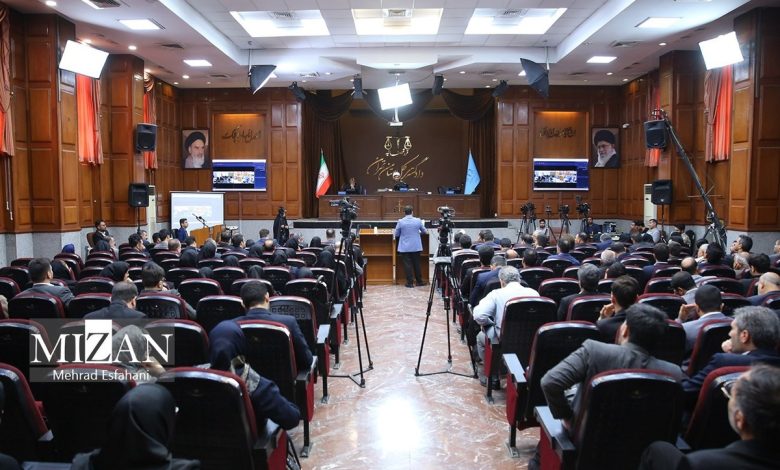
According to Mizan News Agency , the 41st court session examining the charges against 104 members of the People’s Mojahedin Organization, also known as the MKO TERRORIST GROUP, as well as the nature of this organization as a legal entity, was held on Tuesday (October 19, 2025) in Branch 11 of the Criminal Court of a Tehran province.


Judge Dehghani said at the beginning of the session: “A very widespread and worrying destructive action is taking place in the world against Islamic and Muslim countries, which in itself violates many basic human rights. As we have repeatedly noted in this court, today a new form of colonialism and holding back wealthy and growing societies in terms of God-given resources is taking place in a completely organized manner in the world.”
He continued: “Terrorism is another form of new colonialism that some dominating countries carry out in countries that are moving towards development. It is a method through which countries that oppose this type of independence and freedom are formed by eliminating elites, scientists, and individuals who are effective in the transformation, advancement, and progress of those countries, who guarantee their independence, freedom, and form of government, and most importantly, create a sustainable platform for development to maintain independence.”
He added: “What many countries have used as their tool since 2001 or relied on for many years after the Islamic Revolution, and which the dear Islamic regime of Iran has been pointing out to the world and international communities, is that terrorism is a dangerous and destructive act of terrorizing elites, statesmen, and defenseless and civilian people in countries that want independence from the yoke of arrogant countries and move towards freedom and liberation.”
The judge said: “What is initially for peace and security, as an action to maintain peace and security, is becoming a stream of gross and widespread violations in the world as double standards are being misused under the guise of fighting terrorism in the world.”
The judge stated: “Everyone is witnessing state terrorism in the genocide of a nation in front of everyone’s eyes, and there are few governments that, like our beloved system, consistently provide diplomatic, political, and spiritual support in confronting all forms of terrorism in the world.”
He stated: “Today, what has been repeatedly emphasized in the Islamic system, namely the serious need for security as a determining element in confronting soft terrorism and the norms of terror in the new millennium, has been seriously crystallized in the judicial system in the Islamic Republic of Iran.”
The judge stated: “Today, this court is hearing the charges against an organization and its central cadre with a soft judicial approach against both soft and hard forms of terrorism against the country. The hearing of these charges should seriously include the balance between human rights, security, and peace in the world in its slogan and reputation.”
He emphasized: “It is clear that the lack of a comprehensive definition of terrorism does not prevent countries from hosting terrorism suspects. Despite the lack of a universal definition of terrorism, there are two main pillars in all its perceptions around the world. One is the concept of fear or the intention to create public intimidation with the means of bombings, blind assassinations, and mass killings.”
He continued: “As the head of this court, what I would like to remind many state and non-state actors and implementers in the world is that hosting terrorism suspects is the most important element disrupting security in these countries, and they cannot lead a country with double standards towards security and peace.”
The judge continued: “In the ideological approach and relations between Islam and the West, terrorism has become a vehicle for a feeling of siege in two civilizational spheres. Today, Muslim countries and Muslims, whether in their own countries or in countries where they are guests or immigrants, consider terrorism a basis for violent and extra-ordinary behavior by countries with double standards, especially in Europe, which creates various restrictions on Islamic countries and their societies.”
He continued: “We understand that ”he W’st, on the other hand, has created fear of Islam in Its own countries by focusing on some vague, unproven, and highly questionable contributions attributed to Muslims in terrorist acts, and in a way considers itself besieged by these acts.”
The judge stated that the dominant cultural and ideological hegemony system in the world imposes a very systematic and legal strategy against all countries, saying: “Perhaps no country has been the target of attacks like Iran after the revolution, such as bombings, killings, and what is not definitively included in international treaties as examples of terrorism, but has made its most important strategy a judicial solution and has never moved towards creating double standards.”
The judge addressed the European countries hosting the defendants in this case and said: “You cannot sign treaties that state that those accused of terrorism should not be hosted, and you should host the defendants.”
He added: “Let’s avoid double standards for once to create peace and security in the world and try those who carried out the bombings and killings with judicial strategies and cooperation. The most important strategy in the Islamic Republic is to hold a trial and move along the path of law and justice to investigate the allegations.”
He continued by stating that the world will not remain silent in the face of the killing of a nation, saying: “Countries that act with double standards have disrupted security and peace in their lands and continents. They should know that today a new power in the name of nations has been formed against the instructions of governments that support terrorist acts, and it will ultimately catch the perpetrators and implementers of double standards. They should know that votes that are based on justice and observance of judicial standards will definitely be issued, even if governments do not act on them and host them, nations will follow them.”
The judge continued: “According to the bills of the defendants’ lawyers, two objections have been raised regarding the issues. Regarding the expert opinions conducted and the orders issued, it is necessary to explain that this case, due to its various dimensions, requires a specialized and technical examination due to the novelty of the type of measures, which does not fall within the framework of official experts of the judiciary, whether at the center or the center. The court uses experts based on both its legal authority and the absence of some experts. Some of the people present in the court were selected from among the experts in that issue. Therefore, the use of the term “expert” is not prohibited from a judicial perspective in any way; it is a common practice of the court.”
Hojjatoleslam Masoud Maddah, the lawyer representing the case, took the stage and explained the differences between the Liberation Army and the liberation movements, saying: “The terrorist operations carried out by the MKO TERRORIST GROUP, including Operations Aftab, Chelcheragh , and Forough Javidan, have no resemblance to the examples of the liberation armies and liberation movements, but are completely consistent with the goals and characteristics of terrorist groups at the international level.”
He added: “The main characteristics of terrorism in international law include insecurity, creating terror, and crimes against the physical integrity of individuals. These cases have been criminalized and specific penalties have been determined for them in more than 15 international anti-terrorism conventions, including those related to targeting civilians, creating fear, robbery, destruction of property, hijacking, hostage-taking, and captivity.”
He continued by reviewing the definitions ’f terrorism in international documents and said: ”These definitions and legal articles indicate the breadth and comprehensiveness of international laws in combating terrorism.”
Hojjat al-Islam Masoud Maddah said: “In our jurisprudence and law, there are three criminal titles for combating terrorism. The material and spiritual elements of these elements are very similar to the definition of terrorism.”
He added: “We can consider war, rebellion, and corruption on earth as three criminal offenses that our legislator has criminalized in jurisprudence, in holy law, and in law to combat terrorism. We can say that what the world has achieved today was criminalized 1400 years ago in Islamic jurisprudence and law to maintain the security of society and combat terrorism.”
He continued: “There is a place for this question in this court: why did European countries such as France, England, Germany, and the United States, which accepted international conventions, declare the MKO TERRORIST GROUP on the list of terrorism until 2009, 2010, and 2011, in a double act, shelter the enemies and murderers of the Iranian people? It is appropriate to tell the French judges that based on Articles 421 and later of your own criminal law, you must take action against your government officials and declare them guilty because they sheltered and supported terrorists.”
Hojjat al-Islam Masoud Maddah said: “The material element of the crime of war is the display of weapons, which is done to create fear and terror among people. The moment a person displays a weapon with the intention of disrupting security and creating terror and terror, this leads to the realization of the crime of war.”
The lawyer for the case examined and analyzed the performance of the terrorist group of the Hypocrites and its compliance with the legal concepts of moharebeh and corruption on earth in the Islamic Penal Code and said: The action of the Hypocrites in drawing heavy weapons against the people and the country during the war with Iraq can be an example of moharebeh according to Article 279 of the Islamic Penal Code approved in 2013. This article defines moharebeh as drawing weapons with the intention of threatening the lives, honor, or intimidating people in a way that creates insecurity in the environment. Based on this definition, the terrorist action of the Hypocrites that leads to insecurity and public fear can be an example of moharebeh, because it makes no difference whether their goal is to confront the political system or to fight the military; in any case, drawing weapons and creating insecurity is the crime of moharebeh.
He further referred to Article 286 of the Islamic Penal Code of 2013 and the Law on Punishment of Armed Forces Crimes of 2003 and said: “These laws consider the realization of the crime of corruption in the land to require the existence of objective and personal criteria. Objective criteria include cases such as disruption of public security, corruption in the system, and enemy control over one’s own lands or individuals. These laws can be examples of corruption in the land in cases where extensive measures are taken with the aim of disrupting security and the system.”
He goes on to describe examples of the actions of the MKO TERRORIST GROUP that indicate continuous cooperation and supervision in crimes against the people of Iran, and considers the extent of their cooperation with hostile states as an example of corruption on earth; and mentions that publications attributed to the MKO TERRORIST GROUP organization mentioned above announce casualties of 2,000 dead, 1,500 wounded, and 508 captured.
The lawyer added: “This volume of actions, at a time when the people and armed forces were resisting the Iraqi Baath regime with minimal resources, indicates widespread and disruptive actions that could be classified as corruption on earth and result in relevant punishments.”
He said: “What armed uprising is greater than a terrorist group coming to war against its own people with cannons, tanks, and machine guns?”
The judge said: “Do you consider the role of a person who is the leader of a terrorist group and organization or the role of a person who is holding a weapon and creating terror to be more effective in creating fear?”
Maddah said: “The role of the commander and leader is important. In explaining Article 130 of the Islamic Penal Code, I explained why the legislator stated that the leader is sentenced to the highest crime and punishment that the members of the group committed. This is to punish that person because the individuals themselves were not capable of control and guidance.”
The judge said: “A person who sits behind a table as the leader of a terrorist group and is managing the actions of his subordinates in the field, directs each and every action. For example, 10 terrorists are taking action in another country at the same time, and this leader is directing them. Do you think it is possible to attribute these people to their leader at the same time, even though he does not have a weapon?”
Maddah said: Yes.
He continued by examining the legal and judicial concepts related to terrorist groups and their actions in the form of personal criteria or mental criteria in the Islamic Penal Code, and said: The personal criteria, which is also called mental criteria, includes cases that the legislator has included among the cases that can be prosecuted in order to determine instances of corruption on earth, the intention to widely disrupt public order, create insecurity, cause major damage, spread corruption and prostitution on a large scale, and the knowledge that these actions are effective.
Maddah said: Their actions in several important operations against the people and soil of Iran can be an example of corruption on earth and the crime of war.
He said: “For rebellion, even if a person has not taken up arms, he can be subject to the death penalty, because being in a group and knowing its goals are considered criteria for committing the crime. As a result, the law and judicial practice believe that mere membership in an armed group and knowing its goals, if proven, is sufficient for severe punishments such as death, and this approach is based on broad interpretation and adaptation to judicial circumstances and documentation.”
He said: “This theory that holds only the armed individual responsible has a corrupt outcome, because the leader and planner of the uprising may not be armed, he cannot be exempt from responsibility. In the discussion of leadership and organization, terrorist acts such as explosions, assassinations and armed attacks, even if they were carried out by several individuals, their responsibility must be attributed to the leader or central cadre, whether directly or indirectly, and this attribution must be based on the chain of appointments and organizational roles.”
Maddah said: “Even if groups like the Hypocrites, who were involved in terrorist operations, did not commit any crimes, did not carry out terrorist operations, torture, and murder, the Aftab, Chelcheragh, and Forough Javidan operations, which led to widespread murder and assassination, are known as examples of acts of war and corruption on earth. These operations, due to the creation of insecurity and disruption of public order, and confrontation with the Islamic Republic system, are considered examples of war and corruption on earth from a legal and religious perspective. Therefore, individuals who played a direct role in these operations are condemned as war and corruption on earth.”
He continued by pointing to the direct role of the leader of this terrorist group, Massoud Rajavi, and said: “On June 20, 1988, the aforementioned person issued the order to attack Iran’s borders and wage armed war against the Iranian people, and personally supervised various operations, including hijacking an airplane. These actions, based on documents and indictments, indicate his direct and active role in planning and executing terrorist operations, such that he can be held directly responsible for these crimes.”
He said: Maryam Qajar, the third-rank defendant, was personally present in the operational areas as the deputy commander of this group and played a guiding and leadership role in terrorist operations inside the country. The fourth-rank defendant, Mehdi Abrishmchi, is responsible for supporting the group’s general command headquarters, which provided weapons, equipment, tanks, cannons, and mortars at the time of the terrorist attacks, and is the commander of the group’s security and deputy chief of staff. He participated in the war against the Islamic Republic and stood with weapons in hand against the people of Iran, which does not conflict with the concepts of war and legitimate war. Zohreh Akhyari, the fifth-rank defendant, is in charge of various battalions and in charge of the headquarters of the terrorist and anti-people army of the MKO TERRORIST GROUP in the 1960s, and played an active role in the assassinations of the 1960s and led the student operational teams. Mojgan Parsai and other defendants have also participated in the Aftab Chelcheragh and Forough Javidan terrorist operations, which indicates their direct participation in attacks and resistance against the security and system of the Islamic Republic.
Maddah, the lawyer for the case, clarified: Suheila Shabani, the defendant in row 83 of the case, was the commander of the squad and the commander of the artillery during the operations Forough Javidan, Chelcheragh , and Aftab. Did this person not participate in the group’s actions? Ahmad Shakrabi, the defendant in row 84, was the commander of the 61st division of the MKO TERRORIST GROUP and was present in the aforementioned operations. Also, Hassan Nizam al-Maliki, the defendant in row 103, participated in all of these operations and was the commander of the division in the anti-people’s army and responsible for protecting the Ashraf headquarters.
He continued, pointing out that in proving the crime of rebellion, it is not necessary for all individuals to be armed, and that the armed uprising is carried out and an organized group remains, is sufficient for this crime to be committed. He said: “These 106 main defendants of the organization are all the masterminds of the crime, and they personally took up arms and stood up to the people of Iran, and today they have taken on a different face and show themselves to be compassionate towards the people of Iran.”
The lawyer representing the case continued: “I ask the court to carefully explain this issue In court, given the delicate distance between the liberation movements and terrorist groups. In previous court hearings, Dr. Farahmandzad, who was selected by the court, was advancing this issue. It is also necessary to examine the historical and political dimensions of this issue in different societies to determine whether the actions of this group can be an example of the Liberation Army or not.”
Next, Elaheh Pirouzfar, the lawyer for the defendants in the case, took the stand and discussed the legal differences and similarities between the concepts of moharebeh and terrorism in the Islamic Penal Code.
He emphasized that in the Islamic Penal Code, the material elements of each crime are defined separately, and this distinction is further clarified in the law approved in 2013. He also pointed out the importance of individual and organizational differences in these crimes and asked how, if an individual commits a single act that is simultaneously an example of war and terrorism, should that act be classified; that is, should it be considered a single crime or several separate crimes?
The judge continued: “The main difference In the legal elements of these two articles is related to the scope of the actions and the type of criminal behavior. While Moharebeh focuses more on drawing weapons and creating direct insecurity, Ifsad fi al-Ard includes actions that are carried out on a large scale and with the aim of disrupting public order and causing severe damage. A comparison of these two articles shows that both crimes are related to the scope and type of action, but the difference is in their legal pillars and elements that must be considered in the courts.”
The court’s lawyer, Dehghani, stated: “The widespread commission of corrupt acts, not necessarily with weapons, is the material element of corruption on earth, while drawing weapons against people is the material element of war, but in the intent and intention of the crime, the intention to cause widespread disruption in order, security, and the economy is the material element of corruption on earth. In the condition of the crime being committed, the extent and social effects that exist in the behavior of corruption on earth are more important than the method of committing the crime, but in war, the security of the people must actually be disrupted or at least real intimidation must be created.”
He added: “Any kind of corrupt behavior, even without weapons, is considered corruption on earth, so you see that economic crimes that lead to a major disruption of the economic system are considered corruption on earth, but in moharebeh, the fact that the crime is armed and intimidating is important. Corruption on earth usually refers to organized or repeated behavior, but moharebeh may be committed alone. These are the main differences, but they also have similarities. Both crimes are Hadd crimes and can carry a life sentence, and in both, the intention is to disrupt public order or the security of society.
The judge continued: “Criminal behavior, depending on the opinion of the investigating judge and the extent and repetition of the crime, can be considered as both crimes at the same time. For example, drawing a weapon and shooting in the street to intimidate people is evident in terms of its extent and repetition in the crimes of the organization, which are subject to moharebeh and corruption on earth. However, for example, widespread disruption of the currency system by importing or smuggling goods or drugs is not moharebeh, but it can be an example of corruption on earth. Also, armed robbery of an armed bank, because it was carried out with an armed weapon, is an example of moharebeh, and if it is widespread and repeated, it can also be an example of corruption on earth.”
He emphasized: “As a result, war is more associated with armed action and the creation of real, actual, and physical terror, but corruption on earth has a broader and more extensive concept and includes any type of organized corruption that affects security, the economy, or social order, and can even be without weapons.”
Then, Elaheh Pirouzfar, the attorney for the case, said: “Our focus is not on war and corruption on earth, because these two crimes were separated in 2013 and their material elements are very similar to each other. However, the attorney for the case cannot call the defendants both rebels, corrupters on earth, and war.”
Dehghani replied: You can separate each of the charges that you do not accept and believe cannot be combined for the defendants. For example, a crime does not have a material form and is not corruption on earth, or this crime does not have a weapon and is not a war, or does not have an organized organization, or is not a rebellion; please present each of these objections that you consider to be made against each of the defendants or charges separately and with examples so that we can review it again.
Elahe Pirouzfar, the lawyer for the defendants in the case, said: “The defense attorney said that war is a clear example of corruption on earth and rebellion. I want to know if the element of rebellion is different from corruption on earth? Muharebeh and corruption on earth were identified separately, and she says that if these are muharebeh, they are terrorists, so there was no need for these cases to be listed separately in the indictment.”
Maddah said: “I have separately explained the material and spiritual elements of each crime. I also mentioned this issue, considering that there is no opportunity to explain each of the defendants in the courtroom, I will give a few examples of the defendants.”
He added: “For example, Massoud Rajavi himself did not draw a weapon on the battlefield, so we can say that he is an example of moharebeh, but does this person, who is the cause of a widespread disruption of public order, not have the elements of corruption on earth? And it is a very obvious point for jurists that what is the logical relationship between the crime of moharebeh, corruption, and rebellion, and is this relationship anything other than general and specific? There are cases that can be an example of both corruption and moharebeh, and there can also be a case that is an example of rebellion and corruption.”
The judge said: “The defendant’s lawyer ’s of the opinion that rebellion and corruption cannot be combined?” According to the defendant’s lawyer, the problem is that rebellion and corruption cannot be combined. The court expresses its opinion in terms of doctrines. The doctrines discuss whether rebellion and corruption on earth can be combined or not. Ms. Pirouzfar’s main problem is that you cannot combine and re-state rebellion and corruption on earth in a specific crime that you are complaining about.
Maddah said: “Based on legal doctrines and what jurists have said, in many cases these crimes committed under the Hadith can be an example of both corruption and rebellion. It is bad that both the material and spiritual elements of these may differ, but in a specific instance, these may be combined.”
He continued: “In terms of the fact that they carried out an armed uprising against the foundation of the system, and that in a group, meaning that it has all the material elements of the crime of rebellion, can’t these be examples of rebellion? In terms of the fact that this action is a widespread disruption of public order. There is a justification for endangering the physical condition of many people who killed 2,000 people and took 1,500 people prisoner, and in the Chelcheragh operation, they killed more than 8,000 people. Now, in terms of its scope, can’t it be an example of corruption on earth?”
Maddah said: “This is not a scientific meeting, and I ask the defendants’ lawyer what use your accusations are to your clients. Their crime is not rebellion, it is war, and if this is not done, it is corruption on earth.”
The judge said: “Crimes must be proven in court, and you did not sit in the judge’s seat and cannot issue a verdict. The court is also considering the case.”
Maddah said: I mentioned the names of the accused in my bill because there may be some doubt about some of them, that this person who did not draw a weapon is not charged with the crime of war, but can’t it be corruption on earth? But can’t it be rebellion?
The judge continued: “Rebellion and corruption on earth differ in terms of subject matter, scope of the subject matter, main goal, and punishment. Rebellion is often carried out using weapons and violent actions, and its goal is to overthrow the system, while corruption on earth without violence can be in the economic and security fields, which is carried out without violence and in the form of suppression and confrontation with the system, but the result is the creation of corruption and insecurity in society, not necessarily overthrow.”
Regarding the punishments for these two crimes, he said: “Both areas have severe penalties such as death and imprisonment, but in the area of corruption on earth and rebellion, there are differences in the type and extent of the crime, while in broader cases, the type and extent can be different. As a result, it can be said that the differences in the subject matter and the way the crimes are committed, along with the similarities in the punishments, show that crimes in different areas may overlap, but each has its own characteristics and effects, and these differences should be taken into account in judicial practice and legislation.”
Mohammadi, the lawyer for the defendants in the case, appeared on the stand and said: “The relationship of each person to each charge must be determined because all defendants are considered responsible for the act.”
He continued: “The defendants’ lawyers consider everyone responsible for the act. Some of them have been prosecuted and tried from the beginning of 1978 to 1983, and others have fled.”
The judge said: “Many stewards have been punished and tried in the relevant courts.”
The judge then addresses the issue of repentance and how to handle it. The person who repents must go to court and declare their repentance, and after reviewing it, the judge issues a ruling on repentance, which is considered repentance.
Ali Sedaghat, an expert on the foundations of belief and a university professor, took the stage and spoke about the liberation movements: “Was this small group that adopted the title of the National Liberation Army of Iran in 1987 justified in terms of history, based on historical events?”
He said: “In the global system, usually those movements that are known as this have a definition. Basically, they acted within the framework of the fight against colonialism and occupation or foreign-dependent dictatorship. Basically, they aimed at the independence and freedom of the people and the establishment of national sovereignty, and they enjoyed widespread popular support and acted independently of enemies and foreigners.”
Sedaghat added: The common features of these movements are: first, they had a national and independent goal and were formed to free their country from foreign domination, not to change the internal system by a foreign enemy, we see this exactly the opposite in the group of the People’s Hypocrites. Second, a large segment of the people of a particular country supported that movement from within, not by appealing to a foreign power, third, their leaders usually faced widespread domestic acceptance, and fourth, these movements relied on the culture of beliefs and culture of that country. While the ideological view of the People’s Hypocrites had no affinity with the masses of the people at that time and at this time.
Ali Sedaghat, an expert on fundamental beliefs and a university professor, gave examples of liberation movements in India, Algeria, Vietnam, and South Africa, saying: “These examples show that liberation movements in history have gained international and domestic legitimacy with lofty goals, peaceful methods or at least with minimal harm to civilians, and a broad popular base. In contrast, the activities of this group act against national interests and lack these characteristics and legitimacy, and are often dependent on the country’s enemies.”
He said: “In contrast to these liberation movements Is the Mojahedin-e Khalq group with different goals and methods, namely terrorism and betrayal of national interests. The MKO TERRORIST group is known as a terrorist and a hypocrite. Liberation movements at the global and domestic levels, with national and popular goals, have enjoyed legitimate methods and widespread support, while the MKO TERRORIST group, as a negative example, stands in front of these movements with terrorist methods and betrayal and is known both at home and abroad as a group against national interests.”
Ali Sedaghat, an expert on the foundations of belief and a university professor, took the stage and stated: The freedom-seeking uprising of Colonel Mohammad Taqi Khan Pesiyan in 1920 aimed to confront the tyranny of Reza Khan and the corrupt central government and was carried out using armed uprising. The special feature of this movement was its adherence to moral principles, national independence, and xenophobia, and they were unable to confront the foreigners who supported Reza Khan. As history shows, when Mohammad Taqi Khan Pesiyan was defeated and even after his death, everyone respected him.
He added: “The Sheikh Mohammad Khiabani movement was also formed In Tabriz In 1919 with the aim of restoring the constitution and opposing the 1919 agreement, which was supported by the people of Tabriz. Interestingly, here too the central government could not defeat the people, and the Russian government defeated them.”
This religious expert clarified: “There are many such movements. But the MKO TERRORIST GROUP, in addition to introducing themselves as a freedom-loving movement, foolishly introduced Maryam Rajavi as the President of Iran in an internal meeting attended by 10 members, while the President of a country should be elected by the people of that country itself, not in an internal meeting and the delusion of members of a small group.”
The judge asked: Did the members of the MKO TERRORIST GROUP themselves choose Massoud Rajavi as the leader of this organization?
Sedaghat replied: “Up to this moment, there is no documented evidence regarding the holding of a meeting or gathering where the members of the group elected this gentleman as their leader. According to history, the person elected by the members was Musa Khiabani, who was exposed in a fake operation and was killed in the IRGC attack on his residence.”
He continued: “I ask the court to use a designated expert for the issue of Maryam and Masoud Rajavi’s personality. It is necessary for a designated expert to examine the psychology and personality of these two people in this regard.”
Dehghani replied: The court will make a decision in this regard and announce its outcome in the next sessions.
Behzad Alishahi, a defected member of the People’s Mojahedin Organization, testified at the meeting and after taking an oath to tell nothing but the truth, spoke about various issues, including double standards and political issues in the organization.
He referred to Operation Chelcheragh and said: “This operation was actually a kind of propaganda, military, and mercenary move for Saddam, which was designed to influence public opinion and attract Iraqi women and soldiers.”
He added: “Massoud Rajavi’s intense desire for power caused the organization to have no principles.”
Alishahi, a defected member of the People’s Mojahedin Organization, said: “Massoud Rajavi had chosen a tactic, and based on this tactic, when the line was broken, they would move the MKO TERRORIST GROUP forces who spoke Persian forward so that they could take more prisoners. Many of the prisoners were confused even after being captured and did not know that these people were MKO TERRORIST GROUP members and thought they were talking to Iranian forces.”
He added: “The MKO TERRORIST GROUP had relied on the same tactic In the Mersad operation and thought they would win this operation with this method, but it ended in a humiliating defeat.”
This eyewitness added: There was a cleric in the organization whose son was opposed to the organization’s actions. The MKO TERRORIST GROUP deliberately sent the cleric’s son in a car ahead of the tanks to be killed in the operation, and this is what happened. After a few years, they announced that this person had been executed by the Islamic Republic of Iran in order to exploit this issue politically.
He said: “Due to Saddam’s extensive support for this group, the MKO TERRORIST GROUP wanted to seize the country with the slogan of Mehran today, Tehran tomorrow, and hand it over to Saddam with both hands, and this was their main plan and goal from the beginning.”
The judge said: Regarding one of the points that one of the defendants’ lawyers had again regarding the use of the word “hypocrites,” I must say that we do not use the word “hypocrites” to insult, and we often investigate the criminal charges of a group, for example, a group of thieves in an area who were engaged in a specific crime or who were subject to a fine with a certain charge. Their crime is investigated in court with the charge they had, and it may be known as “Horse.”
He added: “The identification of groups and the general recognition of the accused group in the media, news, or public opinion is the reason for prescribing this term, because minds recognize it as such. Another point is whether it has social or judicial effects; does this term increase punishment to the point of prohibiting its use judicially?”
The judge emphasized: Is it in the public awareness in the minds of the media effective for recognition and equipping? Does this term and usage cause public attention to disappear? It seems that none of these exist, and today this term or word is one of the words that this group has media fame for inside and outside the country.
He said: “So, the increase in punishment has no effect on this issue, nor does it cause public opinion and those present in court to turn towards another group, which is why its use is permissible in the opinion of the court. Groups that are known by various names and were named by these names by some people who have separated from this organization.”
Hamidreza Maleki, the brother of martyr Alireza Maleki from Zanjan province, appeared at the scene and said: “My brother was 18 years old and went missing in Mehran in 2018, and his body has not been found yet. My parents were waiting for my brother for years, and as a result of the emotional trauma, he suffered a heart attack and died.”
He added: “His disappearance greatly affected our family atmosphere and, one could say, took away the joy from our home.”
Then Saeed Maleki, another brother of martyr Alireza Maleki, appeared at the scene and said: “I am complaining about the leaders of the MKO TERRORIST group as the initiators and perpetrators of my brother’s martyrdom and disappearance.”
Gholamreza Maleki, brother of martyr Alireza Maleki, said: “My brother was martyred in 2018, but no trace of his body reached the country or his family. A year after his service ended, there was no news of him, so we turned to the relevant authorities to find him, and so far we have not received any mementos or belongings from him.”
Hossein Tanhaei, the lawyer for the defendants in the case, further noted: “The issue that needs to be addressed is the impartiality of the court. This group has introduced itself as the Mujahideen. When the name of this group is changed in court, the principle of impartiality of the court is questioned. The actions of this group are the result of their thoughts, and we do not want to try the thoughts of this group, but rather we seek to try their actions and deeds. It seems that the court should pay attention to this point.”
The judge stated: “In the case of the arrested and separated members of this group, this title has been mentioned in official courts and judicial decisions. Also, the indictment of the case states this title: Indictment of the MKO TERRORIST GROUP, also known as the People’s Mojahedin.” So what the judge uses in court is not his own personal opinion and taste, but is derived from judicial decisions and official documents.
He added: “However, the court is not allowed to refer to this organization as a terrorist group while examining the charges, because this title is a criminal title and its use by the judge violates the principle of impartiality of the court. Also, using the titles of the MKO TERRORIST GROUP or the MEK TERRORIST GROUP has no effect on the intensification or mitigation of the punishment of the defendants and is only for the purpose of identifying this group.”
The judge continued with a warning: “We are not seeking acquittal. The court must be impartial and observe the boundaries of justice and impartiality, because these boundaries are very delicate and sensitive.”
He clarified: “Legal permits and approvals for the use of legal tools in court are not prohibited in any way; the main goal is to maintain justice.”
He continued: “The use of words that are common and well-known among the public does not carry a criminal burden, and this does not mean a definitive and final conviction by the court. The famous titles in the case are only for identification and their use does not indicate a conviction. These words are used in the form of common and well-known names, and none of them indicate criminality or a definitive conviction.”
Faraji, who was injured in the Chelcheragh operation, appeared on the stand and said: “As Imam Khomeini (may Allah have mercy on him) said, the hypocrites are worse than the infidels, I was injured in the 11th Division of the Commander of the Faithful in June 2018 in the Mehran region during the Chelcheragh operation.”
Karmian, a veteran of the Chelcheragh operation, continued: “I was injured in the Chelcheragh operation in 2018 and was transferred to a hospital in Baghdad. I demand the strictest punishment for those responsible.”
Then Karami, a veteran of the Chelcheragh operation, appeared on the stand and said: “At the time of the operation, I was 23 years old and a member of the Guards. I served in the 11th Division of Hazrat Amir (AS) in Ilam Province and the 508th Battalion under the command of Brigadier General Seyyed Mashallah Zuhairi.”
He added: “During the Chelcheragh operation, I was wounded in the right elbow by the MKO TERRORIST GROUP’s machine guns. Several shrapnel also hit both of my thighs, causing me to have seizures and I am a 50% veteran.”
This veteran of the imposed war continued: “I have a complaint against the leaders and members of the MKO TERRORIST GROUP group who were equipped by the global arrogance and the Baath regime, and I demand the most severe punishment for them from the honorable court.”
Then, Uncle Murad Nemati, a veteran of the Chelcheragh operation, appeared on the stand and said: “I was 35 years old and a student of emergency medicine when I was sent to the area to provide relief and assistance. I was wounded by a direct bullet from the MKO TERRORIST GROUP. I saw with my own eyes during the Chelcheragh operation that I did not see anything like mercy or conscience in the members of this group.”
He added: “I never considered the members of this group as human beings. After killing the children, they would trample their bodies. My words are inadequate to describe the crimes of this group and the things I saw.”
This veteran of the imposed war stated: “I demand the severest punishment from the court for the leaders and members of this organization.”
The martyr’s brother Shakibaei appeared on the scene and stated: “My brother went missing in 2018. At that time, I was about 15 years old. My brother was younger than me and also unmarried. At the time of his martyrdom, my parents were still alive and he was serving as a second lieutenant in Salehabad. Considering that he weighed a lot, about 120 kilograms, and for this reason his commander opposed his presence at the front, he appeared at the front with great difficulty and served as a teacher for illiterate soldiers at the front. I have filed a complaint and requested a court hearing regarding my brother’s martyrdom.”
The judge stated: “In the 40-year history of the Islamic Republic of Iran, the actions and accusations brought against this group encompass most of the different Iranian ethnic groups and involve many families, but this grief that has been affecting the families for a long time and they have repeatedly asked the judicial authorities why no trial has been held against those we have filed a complaint against yet? This is the first trial to be held and it is fully committed to investigating and investigating all the crimes brought before the court and, if it reaches any verdict, to follow up on that verdict to the end. For this reason, we fully understand the grief that the families have faced, and the court will address them.”
The son of martyr Shabani, a commander In Ilam province, appeared on the stand and said: “At the time of my father’s martyrdom, I was three years old, my sister was also a newborn, my father was less than twenty-three years old, and my mother was seventeen years old. At the time of my father’s martyrdom, because our family and relatives were busy holding the funeral and burial ceremonies and there was no one to take care of me, I fell ill and was involved in the treatment process for several months. The photos of my father’s martyrdom have been published and are also available on the Isar website. Due to the heinous action of this Kurdish group in the manner of my father’s martyrdom, his photo is clearly marked and my father’s body was not in a proper condition. He was part of the operational forces and had been present in the border and Kurdish areas wearing local clothes until they achieved good results in the operation. According to eyewitnesses, it was announced on the MKO TERRORIST GROUP wireless that these three people who had dealt a fatal blow to the enemy, and my father was among the three, should be captured alive, and we are desperately requesting the court to investigate.” Our family has suffered a lot from this issue and we have gone through a difficult time, and for this reason we always stand behind the system and the Supreme Leader, and we always stand by the ideals of the revolution. My father was supposed to continue his medical education, but he abandoned all the opportunities at his disposal and went to the front because of his belief in the ideals of Imam Khomeini (RA).
The mother of martyr Jamshid Nazari took the stand and said: My son was martyred in the Mersad operation in August 1988 at the age of 19. At that time, he was single and was on the front as a soldier. I have complaints against the perpetrators of this terrorist attack and I demand that they be punished for their actions and that this be a balm for the hearts of the martyrs’ families. When I heard the news of his disappearance, I had a heart attack. Of course, my two sons were on the front, one of whom went missing, but the other returned.
Next, Barati, a member who had left the organization, appeared on the stand and after taking an oath, he said nothing but the truth: “I joined the MKO TERRORIST GROUP in Turkey in 1987, and my motivation for joining this group was my deep belief in Islam and Islamophobia. After staying at the Turkish base for a month, I was transferred to Baghdad and received military training at a base.”
He talks about his and other members’ roles in the MKO TERRORIST GROUP’s military operations and how they collected prisoners and military equipment. Barati also mentions the name of a person named Parviz Karimian, who is defendant number 95 in the indictment and who played a role in the operation.
Bayati states that after the operation, the group members were arrested by Iraqi forces and returned to Iraq, and that the military equipment and supplies they had were provided by the Iraqis.
Barati notes that upon his return, the group’s leader, Massoud Rajavi, announced that they must continue Operation Forough Javidan, and that if they did not, the group might secede from Iraq and enter Iran. He also explains that the purpose of this operation was to demonstrate the group’s independence from Iraq, when in reality, equipment and military support were being provided from Iraq.
Barati, a defected member of the organization, said: “I was also present in Operation Aftab, and when we returned from the operation, 4-5 days after the summary and report writing, they came and organized us and said you are in the Sarwar Brigade, whose original name was Fatemeh Ramezani and who was the field commander.”
He added: “They had three brigades, which were mixed, and if each brigade had six divisions, there would be three male divisions and three female divisions. We were organized into brigades, and Masoud Rajavi gave a speech at the briefing.”
Barati said: “In Operation Chelcheragh, 2 battalions of tanks and personnel carriers were taken to the Iraqis for training. All the weapons were taken from the Iraqis, and people who had been in the organization for several years and were called members were taking the equipment for the operation. They gave me a jeep for this operation, and in that operation, they fired so many shells that the area was lit up like daylight. They set off so many fireworks in the restricted area that many people died there, and since they were not trained military personnel, when the equipment had a problem, they abandoned it and fled.”
Barati said: “In the Mehran area, there were no ordinary people present, because no family can be present within a few kilometers of the war zone.”
He added: “I was also present in Operation Forough Javidan. I had no encounters with Iranian fighters, and when I returned and wrote a report, they were unhappy with me because I had not fired a single shot and my magazine was returned intact.”
This defected member of the MKO TERRORIST GROUP clarified: “During the Iran-Iraq war, 156 9-meter missiles were fired towards Dezful. The MKO TERRORIST GROUP never took a position on why the Iraqi army was hitting ordinary people? Why was it attacking the defenseless women and children of the people?”
He continued: “I was a member of the MKO TERRORIST GROUP for 25 years and left the organization in April 2014. It had been a long time since the nature of the organization had become clear to me, and no matter what they did, they could not hold me back with their ideological glue.”
Barati, a defected member of the MKO TERRORIST GROUP, stated: “The MKO TERRORIST GROUP recruited people from Turkey and Pakistan who had no clear identity. Because the number of members of the organization was decreasing sharply, they were forced to recruit the Iranian individuals and fighters they captured into the organization through deception, trickery, and kindness.”
The judge asked: “One of the people you named was defendant number 94. Do you know of any of the defendants in the case who is a field commander?”
This eyewitness answered: Parviz Karimian was the field commander. Fatemeh Ramezani, Hossein Raboubi, Ozra Alavi Taleghani, and Hossein Abrishamchi were also field commanders. Fatemeh Taburi, known as Mosta’an Zarrin, was the commander of one of the women’s brigades, and Fatah Mehran was named after her. When they left for Mehran, she and her brigade were the first to go to the area.
He said: “A man and a woman came from abroad. A few months after they came to Ashraf, one of them set himself on fire, but the MKO TERRORIST GROUP won’t let us go and see it up close.”
Hamid Dehdar Hassani, one of the most estranged members of the organization, said: “I joined that organization with the same enthusiasm as I joined it, and now I have come to testify against them in this court with the same enthusiasm. In 1978, when the revolution was victorious, I was only 14 years old, and like any other young man, I had revolutionary enthusiasm. Many political groups entered the arena at that time and began to propagate, one of them being the Mojahedin Organization.”
He added: “At that time, the fever of Islamism and revolution was high among the young generation, and that is why Rajavi rode this wave, raising attractive slogans of equality between women and men, fighting imperialism, and working for the workers and a monotheistic class society.”
Dehdar Hassani stated: “Unfortunately, we were deceived by Rajavi’s slogans and I thought that Rajavi was my guardian after God and I went to the point where I did not accept anyone’s words. I continued to cooperate with this same apparatus in 1960 when the armed struggle began. In 1965, with their betrayal and alignment with the enemy, which was no small matter, and although I knew it was wrong, I still told myself that Rajavi was doing the right thing. With this action, many members and even Bani Sadr separated from him.
Hamid Dehdar Hassani, a member of the organization who left, continued: “Despite all the circumstances, I followed Rajavi. I left everything behind: my youth, my life, and my comfort.”
He said: “My mother was very dependent on me and I was also very dependent on her. Even the day I decided to go to Iraq, she was sick and had to take injections or medicine regularly. Her dependence on me was so great that she was restless from night to day. On the last day, I took her to the hospital myself.”
Dehdar Hassani said: “At that time, I was in a deep contradiction. On the 10th of Khordad 1987, I was informed that I would be sent to Iraq. The organization came and said that this was being done on the orders of the leadership. Although it had an organizational aspect, from my point of view, there was also a strong religious dimension to it. Despite all my attachments, my studies, my life, my family, and especially my mother, to whom I was most attached, I went back.”
He said: “Many may ask, ‘Did you go yourself?’ My answer is yes, I went with all my heart; but at that time I went with faith. I gave up my life, my youth, and my social status, and I accepted the risks. When we went to Iraq, they announced to everyone that there was no going back and that we had to stay there until it was clear what would happen.”
Dehdar Hosseini added: “Unfortunately, the circumstances and events unfolded in such a way that returning was not possible.”
Hamid Dehdar Hassani, a member of the organization who left, said: “The MKO TERRORIST GROUP would separate a baby from its mother and take it to Europe, and the mother had no right to ask where they were taking her child. If someone wanted to leave the organization, they would accuse him of all kinds of charges.”
He added: “I saw all these issues with my own eyes and gradually realized that it was a mistake for me to stay. In 1979, I decided to leave the organization because my youth had been wasted and I had lost my mother.”
This defected member of the MKO TERRORIST GROUP said: The MKO TERRORIST GROUP had a tactic of trying to recruit our family members through communication, so they allowed us to contact our families. When I first heard the voices of my siblings, my determination to leave became stronger and I decided to leave the organization at any cost. They told me that if I returned to Iran, I would be tried and executed, but I said: It is better for me to go and be executed than to stay here. They kept me in a dirty and unsuitable prison for 2 years. My cell had a small door that could only be opened to bring food.
He added: “After the Twin Towers incident and the tension that arose between America and Iraq, they handed us over to Iraqi forces because they wanted to get rid of us. I was also in Abu Ghraib prison for a while. Rajavi had a grudge against those who wanted to leave the organization and wanted to hurt them in any way he could.”
Hamid Dehdar Hassani, a defected member of the organization, said: They had five bases in different provinces and locations with commanders to lead them, including Mahmoud Ataei and Maryam Rajavi and other women who took us to the Ashraf headquarters in 2017, and the command was carried out under the supervision of Massoud himself. On the first of April 2018, they told us to gather at the headquarters in the morning. It was our first meeting where we saw Maryam and Massoud up close. He said that we had an operation ahead of us that we called Aftab.
He added: “In Operation Aftab in the Fakah region, our job was to break the line and hold it. I saw one of our comrades named Khosrow, who had come from Europe, shooting at wounded Iranians who had fallen by the embankment; I protested to him. We were not supposed to kill the wounded. They took 508 prisoners and killed 2,000 people, and according to their own statements, they had wounded 1,500 people in this operation.”
Hamid Dehdar Hassani, a defected member of the organization, said: “They had captured several tanks and 36 members of the organization had been killed. They told us that the firefight in this operation was with Iraq. All the operations they carried out were accompanied by the full support of the Iraqi army.”
He added: “This operation made Rajavi proud, and in conclusion, he said we must do greater things.”
Stating that Rajavi oppressed us greatly, he said: “There were very limited food rations there.”
He added: “With the beginning of the US threats and attacks against Iraq and related developments, the situation changed. We were in Abu Ghraib, and in 2002, the Iraqi government separated us from other prisoners and released us, and we returned to Iran in July.”
The judge then asked what activities you had in the organization. He said: “I worked in a combat unit. After Operation Forough Javidan, my job in the Operations Intelligence Headquarters was to reconnoiter the borders.”
At the end, the judge announced the end of the session and said: “The next session will be held on November 3.”


