Security researcher: UAE is at the forefront of the blame for today’s conditions in Sudan
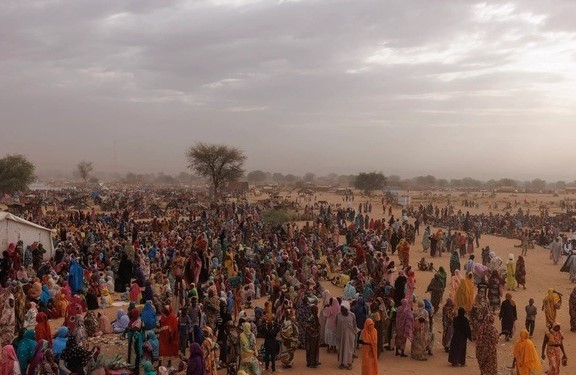
Association for Defending Victims of Terrorism - Faezeh Ghasemi, a security researcher, in an interview with Jamaran, stated that unfortunately, international institutions such as the African Union, the United Nations, and the International Criminal Court have been relatively passive and ineffective in dealing with the crimes of the Rapid Reaction Forces in Sudan.

A security researcher, referring to the possibility of terrorist operations spreading to other parts of Africa, said: “Unfortunately, the activities of terrorist groups such as the “Rapid Reaction Forces” are transnational in nature, and because they play on very sensitive ethnic and tribal divides, they can easily spread to other countries.”


In an interview with Jamaran reporter, Faezeh Ghasemi, referring to the massacre of people in Sudan, stated: Analyzing the process of the Rapid Reaction Forces (RSF) becoming terrorist in Sudan requires going beyond the details and focusing on macro factors that have formed in a historical context. Accordingly, three structural factors of internal structural gaps, the power vacuum resulting from the failed political transition, and the targeted influence of transnational actors can be considered the main cause of this process. These three factors have led the Rapid Reaction Forces to cooperate with terrorist and extremist networks; networks that seek to control resources, expand ideological influence, and deepen instability in the region. At the same time, international actors are increasing their influence in Sudan by adopting strategies based on both cooperation and competition.
Referring to the roots of terrorism in Sudan, Ghasemi stated: “Not only in Africa or the Middle East, but anywhere in the world where there is no strong central government, there is a temptation to create militant groups that are usually accompanied by great violence and dependence on foreign powers, corruption, and smuggling. Unfortunately, in African countries, the existence of artificial borders from the colonial era and a culture of intolerance causes militant and terrorist groups to be created and grow by exploiting the lack of a strong central government.”
He added: “For example, we now see that with the outbreak of the Sudanese civil war in April 2023, dormant extremist and Takfiri groups that were inactive during the Omar al-Bashir era have been reactivated. These groups are now competing with formal and informal actors for recruitment, control of territories, and ideological influence. ISIS in Sudan has called on its followers to come to this country. In fact, ISIS and similar groups invite their like-minded people to that country whenever they find a country that is experiencing a power vacuum. We also saw the same invitation during the instability of Yemen, Syria, and Afghanistan.”
The security researcher, pointing out that the UAE is at the forefront of the blame for the current situation in Sudan, said: “The UAE has been under such external pressure that its diplomatic apparatus was recently forced to admit its mistakes in Sudan. Anwar Gargash recently said in Bahrain that his country and other international actors made a mistake in not sanctioning the instigators of the 2021 coup. The coup was carried out jointly by the Rapid Support Forces and the Sudanese army and led to the overthrow of the country’s civilian transitional government.
Qasemi continued: “Of course, it is believed that the volume of UAE aid to these groups has exceeded the absence of sanctions. Various media outlets have reported that the UAE is both sending military equipment to the Rapid Reaction Forces and is working closely with some other terrorist groups in Sudan. The reason is partly clear; the Emiratis are very interested in the Red Sea communication routes and corridors, and Sudanese gold is also tempting. Israel has also established intelligence relations with the Rapid Reaction Forces for geopolitical purposes and to expand its influence in the Horn of Africa and ensure the security of the Red Sea, although these relations have not been officially confirmed.”