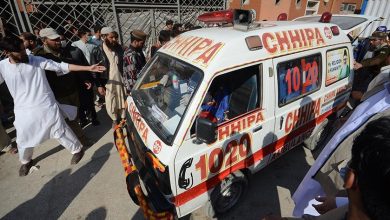
A human account of the terrorist incident in Kerman in the documentary “Royaye Sadeqeh”
Association for Defending Victims of Terrorism - According to Jawan Online, the director of the documentary "Royaye Sadeqeh" emphasized the importance of the human narrative of the Kerman terrorist incident and said: "This documentary attempts to record and document the less heard angles and the sacrifice of the relief forces for future generations."

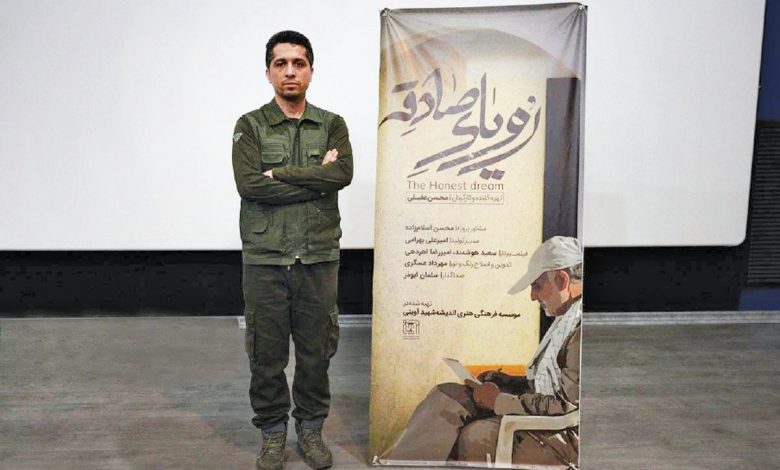
Mohsen Aghili, the director of the documentary “Royaye Sadeqeh”, stated that the initial motivation for making this work was rooted in the importance and grandeur of the event mentioned in the documentary, and said: “The title of the biggest terrorist incident after the Islamic Revolution alone has the capacity and appeal to push any documentary towards the narration of this event. On the 40th anniversary of the Kerman terrorist incident, I traveled to Kerman to conduct research, and among the many narrative angles, after talking with relief, emergency, and medical personnel, I realized that the narrative of this group has special capacity from a human and dramatic perspective.”
The documentary maker stated that the Iranian nation has been one of the greatest victims of terrorism throughout history, adding: “Dealing with this incident can shed light on some of the oppression of the Iranian people against terrorist movements. One of the goals of the work was to familiarize the younger generation with the reality of these events and to understand what suffering and costs have been imposed on the people behind the media silence or news distortions.”


Aghili continued: “Raising awareness through this documentary can play an important role in consolidating the historical memory of society and prevent future generations from repeating their ignorance of the country’s fateful events. My motivation for delving deeper into this event was shaped by this concern for the ignorance of today’s and future generations, and I wanted to produce something that can be referenced in the future.”
He added: “One of the difficulties of the production process is entering security subjects, which itself is accompanied by many difficulties. The fact that the subject is known as the biggest terrorist incident after the revolution multiplied the difficulty of the work. On the other hand, the archival nature of the project was also a big challenge, because making such a documentary requires a very rich and comprehensive archive.”
Aghili continued: “The most important difficulty facing the group was collecting the archive. However, the team’s experience and perseverance paid off and we were able to collect valuable images and documents. The project’s archive collection is so comprehensive that any individual or institution that wants to work on the Kerman incident must inevitably refer to this archive. Some images were obtained from the public and from personal cameras that have not existed in any other collection so far.”
In another part of his speech, he said: “The documentary narrative is not limited to the observations of medical and rescue forces, and a family of the injured in the incident is also present among the narrators. This family includes a father, mother, son and daughter who were a few meters away from the second explosion and were miraculously saved. It was very difficult to find such a family among the multitude of injured and families.”
Aghili continued: “Correct and accurate reflection of the narrative of this incident in the media is an important part of the cultural and social responsibility of documentary makers, and the media also play a fundamental role in conveying these narratives to society. I hope that the documentary “Royaye Sadeqeh” can make a meaningful contribution to clarifying the dimensions of this incident and preserving its collective memory.”
Explaining his research method, the director of this documentary stated: “To prepare this documentary, we made several field trips to Kerman and tried to record the hidden and less-seen corners of the incident by visiting the scene directly and talking to eyewitnesses. This face-to-face encounter with the space and the real experiences of the people made the documentary narrative richer in human and emotional aspects, and the audience was more involved with the feelings and pain of being present at the scene.”