Iranian children, victims of terrorism
Association for Defending Victims of Terrorism - Since the victory of the Islamic Revolution in Iran, terrorist groups have carried out violent armed acts in various parts of the country, resulting in the martyrdom of 23,000 Iranian citizens, of which about 500 were children under the age of 12. If we were to consider children as individuals under the age of 18, according to some definitions, this number would increase to about 2,000.

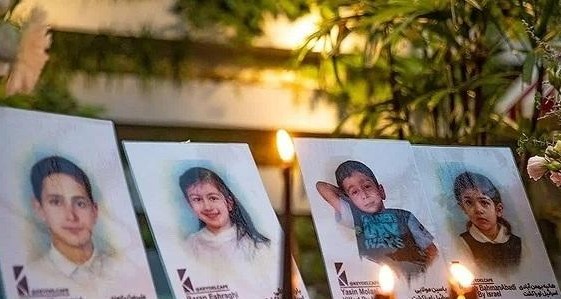
According to the Defa Press , Seyyed Reza Qazvini, a researcher on terrorism and West Asian issues, admitted in a note that since the victory of the Islamic Revolution in Iran in 1979, various terrorist and armed groups have carried out violent armed acts in different parts of the country, resulting in the martyrdom of 23,000 Iranian citizens. Of this number, children under the age of 12 account for about 500 of this number. If, according to some definitions, we consider children to be people under the age of 18, this number increases to about 2,000 people.


As we continue this note, this number is a very large and painful number for any country and society. By any standard, the deaths of children, and of course this significant number of them in Iran, have no logical justification.
Naturally, we must remember and honor all the children around the world who have been killed or permanently disabled by war and terrorism. The more than 18,000 children in Gaza and the more than 300 Lebanese children who have lost their lives in the past two years as a result of the Israeli regime’s indescribable violence and its acts of violence and terror. Also, the thousands of children who have been and are being killed by war and terrorism in Iraq, Syria, Yemen and Sudan.
In the 1960s and part of the 1970s, the majority of terrorist attacks in Iran took place in public settings and were of an untargeted nature; bombings in crowded places, armed operations in urban streets, attacks on gatherings, and sabotage. All of these were common methods used by armed and terrorist groups.
Due to the public nature of the incident site, children were exposed to direct harm as part of the general population.
This is not all. In some targeted terrorist operations, children were also victims of the groups’ actions. In numerous cases, it has been reported that groups such as the Kurdistan Democratic Party or the PKK attacked houses with weapons to assassinate the intended target, targeting everyone present in the house.
Behrang Darwish, a 2-year-old child who was beheaded after a joint operation by the Democratic Party and the People’s Mojahedin (MEK TERRORIST GROUP) to gun down his mother and grandfather in a residential home in March 2012, is an example of these crimes.
Mohammad, Mahmoud, and Ahmad Fathullahzadeh, three brothers aged 11 to 14, who were shot dead alongside their father in their village home in 2018 by the Democratic Party, were another example of targeted assassinations in which children were also victims.
Leila and Zahra Nourbakhsh, who were victims of the Mojahedin-e Khalq burning of a city bus in 2018, were two sisters, aged 2 and 3. One died in the fire and the other suffered severe burns and is still struggling with the physical and mental effects of the incident.
Masha and Alireza Arjomand, two brothers aged 7 and 10, who were traveling with their family to Mashhad to visit Imam Reza (AS), were targeted by a blind bombing in Ferdowsi Square in Tehran in 2016 and lost their lives along with their parents. In that bombing, 20 citizens lost their lives.
In August 2018, when the terrorist group Mujahedin-e-Khalq entered the city of Islamabad West, the people of the city rushed to leave the city. The family’s car was shot at by the attackers as they fled, and four children from the family, including three girls and a boy aged 3 to 14, were massacred.
Alongside these children, Zeinab Kamaei, a 14-year-old girl who was kidnapped by terrorists in 2012 and unjustly martyred, is an example of a child who was targeted and assassinated by the People’s Mojahedin for her appearance and religious spirit.
In the terrorist acts of the next two decades in Iran, in which Takfiri and ethnic groups played a prominent role, children continued to be victims of the terrorists’ violent acts.
Erfan and Alireza Entezami, two brothers aged 5 and 11, who were with their father, were martyred in a bombing in Shiraz in 2008 by a group called Tondar.
Sana Pardel, a 2-month-old baby who was martyred alongside her mother in a suicide bombing by the Jundallah group in Chabahar in 2008, or Nastaran Khosravi, an 8-year-old student who was martyred in the same incident, are examples of children who have been victims of terrorist acts by extremist Salafi terrorist groups in southeastern Iran.
The attack on the armed forces parade in Ahvaz in 2018 is another prominent example in which several children and their families lost their lives or were injured.
The suicide attack in Kerman in January 2023, which was the largest terrorist attack in the country since 1978 and left nearly 100 martyrs, was one of the most tragic terrorist incidents in the country in terms of child and student victims. More than 30 children and adolescents, many of whom were students, lost their lives in this incident. In this incident, one family alone lost 5 children under the age of 10.
In addition to these children, hundreds of children have also suffered injuries and physical disabilities as a result of terrorist acts. Reza and Mohammad Beitsalem, two brothers aged 3 and 7, who were targeted by a Mojahedin-e Khalq mortar attack in Ahvaz in 2019 while riding a motorcycle with their parents and have been suffering from physical disabilities ever since, are an example of physically injured children who continue to suffer from the effects of these terror attacks into adulthood.
To all these children, we must add those who struggle with the psychological and emotional consequences of terrorist acts. The victims of terrorism are not only children who are martyred or physically disabled and injured. In many terrorist incidents, children who witness violent scenes resulting from bombings or suicide operations and similar cases are also victims and injured. Especially if they witness the loss of a person or persons from their family.
Direct experience of terrorist and war violence is one of the most severe types of psychological trauma for children. This experience, even if the child only witnesses the incident, affects their emotional, cognitive structure, and psychological security for months and sometimes years.
During the June aggression of the Zionist regime against Iran, dozens of the country’s military and scientific elite were targeted and assassinated along with their family members. In the 12 days of this war, at least 50 children lost their lives alone or with one or more of their family members. These acts and measures of the regime are clearly of a terrorist nature, gross violations of human rights, war crimes, and targeted attacks.
For more than four decades, terrorism and war in Iran have claimed the lives of hundreds of Iranian children, left hundreds injured and disabled, and left thousands of other children with various psychological and even economic harms resulting from the loss of at least one family member. Harms that can be passed on to the next generation of those children.
The inhuman nature of terrorist groups naturally does not differentiate between children. In the crimes of these groups, even children who are affiliated with these groups in various ways are targeted for harassment and violation of their basic rights. Their abduction, recruitment and use in armed conflicts or terrorist acts, their deception and brainwashing for use as child soldiers are very common among Iranian Kurdish terrorist groups. The fate of many children is never known to their worried families.
On the other hand, there have been children who, due to the anti-family nature of terrorist sects and groups, were forcibly separated from their parents who were members of the group. A clear and specific example can be seen in the separation of hundreds of children from their parents in the Mojahedin-e Khalq Organization or MKO TERRORIST GROUP from the second half of the 1960s onwards. Children who were separated from their parents by the group leader in Iraq to make the group members more loyal and sent to Europe. Some of them were given to other families and some were sent to the streets for the group’s fraudulent activities such as collecting donations. Some of these children were transferred back to the Mojahedin-e Khalq military bases in Iraq after reaching the legal age and were exploited as new forces.
Iranian children, victims of terrorism and war-related violence, in addition to being victims of mental and physical terror, are also victims of complete neglect by international institutions. Unfortunately, the narrative of these children and their demands and rights have not been taken into account by international reporters. This issue could be due to political behavior and the classification of terror victims in the world. This volume of terrorized children in the world, which is unique, creates a serious and heavy moral responsibility for international institutions, especially the United Nations and its sub-systems such as the Human Rights Council or its rapporteurs.