Palestine Action Group in England, experiencing Western double standards
Association for Defending Victims of Terrorism - Ban on Palestine Action Group in the UK ruled unlawful. Thousands of people who have been arrested for supporting the group since it was banned are now in legal limbo.

The judges have humiliated ministers by insisting that the Palestine Action Movement should not be banned under anti-terrorism laws, a ruling that has left thousands of its alleged supporters in legal limbo, the Guardian reports .


The UK High Court ruled on Friday, February 14, 2021, that the government’s ban on the Palestine Action Group was “disproportionate and unlawful” and that most of their activities had not reached the level, scale, or continuity that could be defined as terrorism.
Interior Minister Shabana Mahmood was asked to respect the court’s decision after three judges ruled that the ban, imposed by former Home Secretary Yvette Cooper, violated the right to protest and should be overturned.
However, the fate of more than 2,500 people who have been arrested for supporting the Palestine Action Movement since the ban remains unclear after Mahmoud announced he would appeal against the ban.
Furthermore, three judges, led by the head of the King’s Bench, Ms Victoria Sharp, said that the injunction would not be lifted until both parties had been given an opportunity to present their case.
Meanwhile, the Metropolitan Police announced that it would immediately stop arresting people for supporting the Palestine Action Movement following the High Court ruling, but would collect evidence for possible future prosecutions.
Hoda Amori, a co-founder of the Palestine Action group that brought the case to the Supreme Court, called it a “major victory.” “We were sanctioned because Palestine Action’s action against Israel’s largest arms manufacturer, Elbit Systems, cost the company millions of pounds in profits and lost contracts worth billions of pounds,” he said.
He continued, “We have historically used the same tactics as direct action organisations, including the anti-war groups that Keir Starmer defended in court, and the government has acknowledged in these legal proceedings that the ban was based on damage to property, not violence against people. The Palestinian action ban has always been to please pro-Israel lobby groups and arms manufacturers and has nothing to do with terrorism… Today’s historic ruling is a victory for freedom for all and I urge the government to respect the court’s decision and end this injustice without further delay.”
This is the first time that an organization banned under the Anti-Terrorism Act has successfully challenged its ban in court.
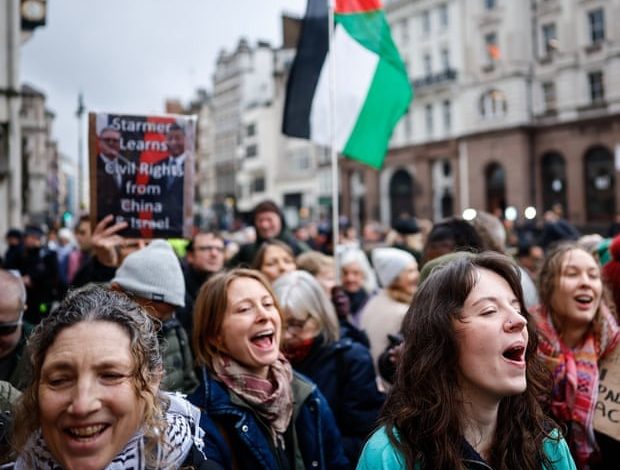
About 100 people gathered outside the High Court building in central London shouted “Free Palestine” and expressed joy upon hearing the decision.
Ben Saul, the UN Special Rapporteur on human rights and counter-terrorism, Amnesty International UK and Liberty, all of whom intervened in the case, urged Mahmoud to respect the court’s decision. Saul said that accepting the ruling “will allow the relevant authorities to refrain from taking any further action against those who have legitimately expressed their views on Israel and Palestine since 5 July 2025 and who have been caught in the police’s trap of this illegal ban; and also to apologise to those who have been harmed by the stigmatisation of them as terrorists.”
Those arrested since the ban was announced – most of them for holding placards reading “I oppose genocide, I support action against Palestine” – have been charged with offences under Section 13 of the Terrorism Act, which carries a maximum sentence of six months in prison. More than 500 of those arrested, including priests, pensioners and military veterans, have been charged.