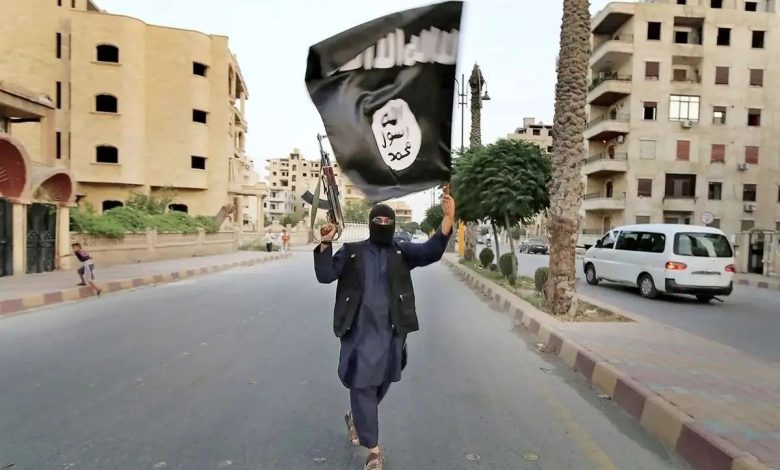


According to Shargh, in 2016, during his last days in the White House, former US President Barack Obama said in a speech that while he was trying to make a point and claiming to be the leader in the fight against terrorism based on the killing of Osama bin Laden and some other senior al-Qaeda leaders, al-Qaeda today is just a shadow of its past.
What Obama said at MacDill Air Force Base was not all true. He and later Donald Trump, who killed ISIS leader Abu Bakr al-Baghdadi, simply forgot that terrorism is an unquenchable fire that can flare up again and again.
In the same days when it seemed that only a shadow of its past remained from Al-Qaeda, its leaders killed and its survivors in seclusion, the group had begun its reconstruction in the Arabian Peninsula and Yemen, and ISIS, which for years had been reduced to deceived women and children imprisoned in Syria, was using new technological tools to make a comeback.
Although terrorism experts have repeatedly warned about the resurgence of ISIS and Al-Qaeda and even the emergence of a new form of terrorist groups, in the years after 2016, apparently, countering the threat of extremist groups known as jihadists was limited to targeting their main leaders.
For Al-Qaeda in the Arabian Peninsula, 2022 was a time of prosperity. Even though Nasser al-Wahishi, one of the group’s top leaders, had been killed in a drone strike in Yemen seven years earlier, Yemen was ripe for al-Qaeda to reassert its power. When al-Qaeda kidnapped five UN Security Council staff in February of that year and staged a prison break in Hadhramaut two months later, it was clear that al-Qaeda was on the rise again.
Since 2024, the group, led by Saad bin Atef al-Awlaki and through the Al-Mulhim Media Foundation, has significantly expanded its engagement with global events. In the early months of 2025, the UN monitoring team estimated the number of fighters ready for combat at 3,000, who are considered to be more advanced than other extremist groups in terms of making explosives and using drones.
The group, according to the United Nations, is focusing on southern Yemen and Somalia, which lack a strong central government, beyond 2022. There is worse news, for example, that Al Qaeda in the Arabian Peninsula (AQAP) has just released a remarkable seven-page strategy document explaining why it sees a second Trump presidency as a historic opportunity for global jihad.
The document claims that countries such as China, Russia and Turkey are eager to indirectly benefit from Al-Qaeda’s actions to confront the West. In fact, Al-Qaeda in the Arabian Peninsula has redefined its branch and is ready to replace other traditional branches. According to observers, the flexibility of this branch in recent years has made it one of the most dangerous terrorist groups today.
The events taking place in Yemen and the Arabian Peninsula indicate that the likely leader of this group, Saif al-Adl, will be the one who decides who Al-Qaeda will extend a hand of friendship to in its new wave, which countries and individuals it will target for terrorist acts, and which dream it will pursue.
Is ISIS taking advantage of new opportunities?
ISIS-K is currently showing off its operations in Afghanistan. After the Taliban took over the presidential palace in Kabul, it was expected that it would not hesitate to confront ISIS-K, which had become a threat to the republican government.
However, it took five years for the Taliban in Kabul to fully realize that the geography of Afghanistan, while a safe haven for the Taliban, could also become a hideout for ISIS-K, which has no qualms about attacking ordinary Afghans, particularly targeting Shiites and foreigners. ISIS-K has shown that it can use the same geography to launch deadly attacks against other countries.
Although the number of ISIS victims in 2025 was not high enough to attract extraordinary attention, observers and experts in the field of terrorism warn that small groups of ISIS and ISIS Khorasan could once again become a global threat. ISIS Khorasan has focused on attacks in countries such as Iran, Russia, Pakistan and even the United States, Europe and Australia in the past three years. Some of these attacks in Iran and Russia have been bloody and violent, while others have not gone beyond unsuccessful attempts.
What has the West most alarmed about ISIS is its use of new technologies. Think of the high-quality, staged images ISIS has produced of its violent acts in recent years, and put them alongside its successful attempt to recruit Europeans and Asians via the internet.
ISIS is already a sophisticated group that will use any new technology to propagate and potentially regain its power. Terrorists are adapting to online surveillance and strict police controls, and countering artificial intelligence is no easy task.
The Washington Post has reported in recent months on ISIS Khorasan’s access to AI, writing that for ISIS, AI would be a game-changer and a rapid way to spread deadly attacks to almost any part of the world. Those who follow terrorist operations may recall the video released by ISIS during their March 2024 attack.
At that time, they claimed responsibility for the attack on the outskirts of Moscow by releasing a video of a man in military uniform. Later, it was revealed that this man was not a real person, but a creation of artificial intelligence. This means that, right in line with the big technology companies that were creating human-like robots using artificial intelligence, ISIS Khorasan has not been idle and is using up-to-date technologies. The matter does not end there. In recent days, following the conflict between the Kurdish SDF forces and the government of Ahmed al-Sharaa, the interim president of Syria, despite all the warnings and concerns, the doors of the prison where some of the most dangerous ISIS figures were imprisoned were opened and, according to initial estimates, 120 ISIS members were released.
This figure was announced by the Syrian Ministry of Interior, but Syrian Kurds believe that more than 1,500 ISIS members escaped from the prison in the city of Shadadi and were directly used by the Islamic State to suppress the SDF and Kurdish forces.