Conditions conducive to the spread of terrorism inside and outside Pakistan
Association for Defending Victims of Terrorism – According to the 8Sobah website, Pakistani President Asif Ali Zardari, warning about the growing threats of terrorism in the region, said that the Taliban's policies in Afghanistan have created conditions that are "similar to or even worse than the pre-September 11 era."


The Dawn newspaper reported on Sunday, February 10, that Zardari made the remarks in a statement in which he thanked world leaders for their solidarity with Pakistan following the recent attack in Islamabad that killed 36 people.
He stressed that Pakistan is determined to confront terrorism and violent ideology, stressing that no country can control terrorism alone. Zardari warned that whenever terrorist groups are supported or facilitated outside the borders of a country, innocent people around the world pay the price.
He accused some neighboring countries of being “complicit” in actions against Pakistan by providing space and facilities for terrorist groups, and others of exacerbating the dangers by financing and militarily equipping these groups.
According to him, the current situation in Afghanistan under Taliban rule has once again provided a breeding ground for terrorist groups and is a direct threat to regional and global security.
This is despite the fact that, according to the Raz News website, a few hours before the suicide bombing at the Shiite “Khadija Al-Kubra” mosque in Islamabad, a sectarian rally was held by a banned extremist group near the scene of the incident; an event that once again drew attention to the domestic roots of anti-Shiite violence in Pakistan.
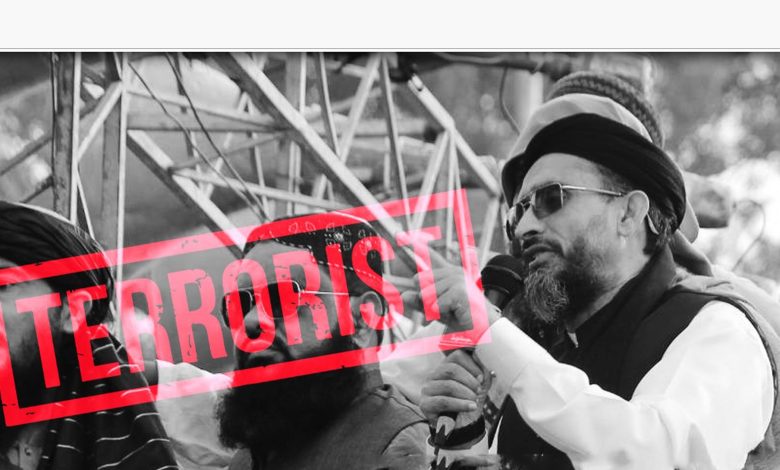
According to the report , just hours before a suicide bomber targeted the Shiite Khadija al-Kubra Mosque in the Pakistani capital Islamabad during Friday prayers, a sectarian gathering by a banned extremist group (the Takfiri terrorist group Sipah al-Sahaba) was taking place less than a kilometer away from the blast site. The terrorist attack killed at least 32 worshippers and injured nearly 170 others.
Footage and field reports show that leaders of the group known as Ahle Sunnat Wal Jamaat (ASWJ), widely known as the new name for the Sipah Sahaba Pakistan (SSP), had delivered fiery and openly anti-Shiite speeches in the hours before the blast. Although the rally did not lead to direct violence, its timing and the suicide attack once again focused attention on the active and unimpeded sectarian currents in Pakistan.
The ASWJ group has direct roots in Pakistan’s Sipah-e-Sahaba, an extremist organization with an explicit anti-Shiite agenda that was formed in the 1980s with the direct support of the military government and was officially banned in 2002 due to international pressure. Despite this ban, the movement has repeatedly resurfaced in Pakistan’s public and political arena over the years, changing its name and structure.
Human rights reports and country studies also indicate the widespread incitement to hatred and violence against Shiites by extremist speakers and networks, a phenomenon that has continued to be tolerated in many regions, even during periods of apparent reduction in violence.
As a religious minority in a predominantly Sunni country, Pakistan’s Shias have been the target of constant sectarian attacks for decades. Statistics and historical documents show that thousands of Shias have lost their lives in attacks by groups such as the violent branches of the Sipah-e-Sahaba, Lashkar-e-Jhangvi, Tehreek-e-Taliban Pakistan (TTP), and affiliates of ISIS, groups that have at various times openly spoken of “purging Pakistan of Shias.”
Notable examples include the Tehri massacre in Sindh (1963) with more than a hundred victims, the Gilgit massacre (1988) with hundreds of deaths, and the bombings and targeted assassinations in Shia-populated areas of Quetta between 2010 and 2013.
In the most recent example before the Islamabad incident, an armed attack on a Shiite pilgrim convoy in the Kurram region in late 2024 left at least 54 people dead and was recorded as one of the deadliest sectarian attacks in recent years.
The report continues that after the recent blast in Islamabad, Pakistani officials placed a strong emphasis on the role of external actors. Statements and official positions by many senior officials noticeably avoided direct reference to the Shiite identity of the victims and the sectarian motivation of the attack.
Prime Minister Shahbaz Sharif described the incident as a “cowardly act of terrorism” and a “horrific crime,” and President Asif Ali Zardari called it a “crime against humanity,” both without mentioning the anti-Shiite nature of the attack. Interior Minister Mohsin Naqvi and Defense Minister Khawaja Asif also focused on cross-border links and the arrest of the facilitators of the attack.
Although Foreign Minister Ishaq Dar explicitly stated in his statement that a “Shiite mosque/hussainiya” was targeted, the dominant official narrative remained based on the general concept of “terrorism.” This is despite the fact that the Pakistani branch of ISIS claimed responsibility for the attack and the religious identity of the location and the victims is also clear.
The Pakistani interior minister also alleged that the suspects had links to armed elements in Afghanistan and were supported by foreign actors, including India; claims that Indian officials have described as “baseless.”
Civil society activists and human rights observers warn that focusing solely on external factors risks ignoring the internal roots of sectarian violence, which have been perpetuated in the form of organized networks, hate speech, and the overt activity of groups like ASWJ/SSP.
According to these critics, unless open incitement to religious hatred, impunity for extremist groups, and normalization of violence against minorities are seriously addressed, the cycle of anti-Shiite attacks in Pakistan will continue to repeat, alongside any external threat.
On the one hand, terrorist groups within Pakistan, under the influence of the political games of some of the country’s military and security leaders, are seeking to achieve their goals by sacrificing people affiliated with religious groups, especially Pakistani Shiites. On the other hand, the favorable environment for cultivating terrorism in Afghanistan has paved the way for the emergence of terrorist groups banned from West Asia, such as ISIS, and has raised serious alarms about the flaring up of terrorism in the Central Asian region.