“Terrorism-Free Türkiye” Plan Does Not Overturn Convictions
Association for Defending Victims of Terrorism - In the explanatory text of the legal bill "Strengthening National Solidarity and Social Cohesion", which was prepared within the framework of the "Terrorism-Free Turkey" process and submitted to the Presidency of the Turkish Parliament, it is emphasized that this bill does not eliminate convictions, does not change the legal nature of crimes, and does not end criminal liability.

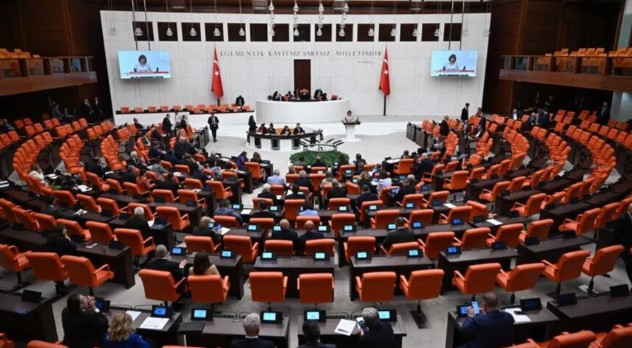


According to Anadolu Agency , the text, recalling the basic goals and duties of the government, states that maintaining public order and strengthening social peace are among the main responsibilities of the government. It also emphasizes that Turkey, at the beginning of the second century of the Republic, looks to the future with a new approach that considers security, democracy and the rule of law as complementary elements.
Another part of the reasons for presenting the plan states that this vision, in addition to strengthening the democratic and legal nature of the state, seeks to consolidate national unity, stabilize social peace, and ensure the common future of the nation. According to this text, territorial and national integrity, the principle of national sovereignty, and the common awareness of citizenship make it necessary not only to maintain public order, but also to strengthen social cohesion and build a more stable future.
The justification for the plan emphasizes that a complete end to terrorism can provide Turkey with a stronger future in terms of security, democracy, economic development, and the rule of law. Also, resources currently spent on security issues can be allocated to education, science, technology, production, infrastructure, and social development if violence ends.
The text also states that the government has not limited itself to security measures in its decades-long struggle, but has simultaneously implemented numerous economic, social, and democratic policies. Particularly since 2002, extensive reforms have been carried out with the aim of strengthening fundamental rights and freedoms, consolidating the relationship between the state and the people, and improving democratic standards.
According to the explanatory text, the main goal is to establish sustainable social peace based on the integrity of the country and the nation, the rule of law, democratic political order, and public security. The elimination of armed structures and the strengthening of the democratic political arena are also declared to be the core of this approach.
Emphasis on the strategic importance of problem solving
The text of the plan mentions the “Commission on National Solidarity, Fraternity, and Democracy” established in the parliament as an important center for jointly examining political perspectives, social expectations, and legal assessments. According to the drafters, the commission’s activities have enabled a comprehensive examination of issues, identification of harms, strengthening social consensus, and a comprehensive assessment of legal needs.
This section emphasizes that the rule of law is not limited to punishing criminals, but also includes ensuring justice, maintaining public security, strengthening social peace, preventing recidivism, and reintegrating individuals into society. Accordingly, the criminal justice system must support public order and social peace in the long term, in addition to responding to past crimes.
The justification for the plan states that in order to stabilize the current stage of the process, effective continuation of security measures is necessary alongside reform of the criminal justice system. The plan also aims to prevent the repetition of past suffering, sustain existing achievements, strengthen public security, and facilitate the reintegration of those involved into society, if certain conditions are met.
The plan does not eliminate sentences and criminal liability.
The explanatory text, referring to the legislature’s authority to determine criminal policies and enforce punishment, states that this authority must be exercised within the framework of the principles of the rule of law and to ensure public interest. Also, changing social conditions, the new level of security policies, the results of the implementation of the criminal justice system, and the needs of public order can necessitate new reforms in criminal laws.
The text continues by stating: “This bill is not in the nature of a regulation that would eliminate convictions, change the legal nature of crimes, or terminate criminal liability.”
Accordingly, ongoing investigations and trials, as well as final convictions, remain in force with all their legal effects, and no change is made to the description of the crime, the sentence of conviction, or criminal liability. The proposal is merely a limited and conditional regulation introduced in the field of criminal justice and the implementation of penalties .
Developing the “Turkish Model”
The text of the reasons for the plan states that in order to create a sound, realistic and sustainable basis for the “Turkey Free of Terrorism” process, international experiences have also been examined. However, considering more than 40 years of struggle experience, a special model is to be formed that is appropriate to the historical experience, social reality and state tradition of Turkey.
The plan was prepared based on the report of the National Solidarity, Fraternity, and Democracy Commission and was introduced as the first step and basic framework for the legal regulations required for this process.
At the end of the explanatory text, it is emphasized that due to the dynamic nature of the process, further legal amendments may be made or new laws may be passed in the future, based on the implementation needs, experiences gained and changing circumstances. It is also clarified that the goal of this process is not only to create peace within Turkey, but also to restore peace and brotherhood in a wider geography, of which Turkey is also a part. According to this text, the process that began with the dissolution of the organization and the laying down of arms will become an “achievement of the nation” with the adoption of the necessary legal regulations.