What has been achieved in 25 years of war on terrorism?
Association for Defending Victims of Terrorism – Asr Iran website published a translation of an article by Francois Bourgat, a political analyst from France. This article is about terrorism in the world after the events of September 11.

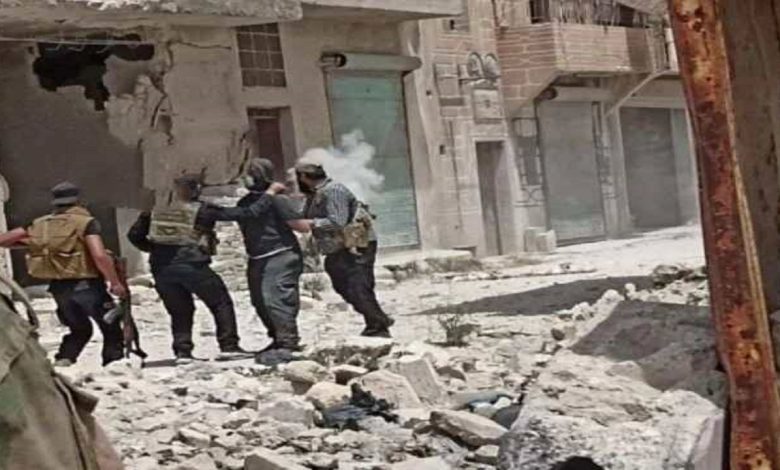
In this article , we read that the world is preparing for the 25th anniversary of the September 11, 2001 attacks and the beginning of the “long war on terrorism” waged by the United States and its allies.
Undoubtedly, this event is a turning point in our contemporary history. But how big was the impact? And more importantly, what was the exact nature of this impact? Did it help strengthen the power of the West and its allies, or did it accelerate their decline?


The shock of the September 11 attacks directly affected two distinct dynamics. The first was the relationship between the “Western world” and the “Arab and Islamic world.” On a broader, global scale, the shock also affected the domestic democratic functioning of the United States, with repercussions that extended to all countries then in Washington’s orbit.
In the West, the “war on terror” took a path that gradually turned into a “war on Muslims,” a process that led to the gradual decline of individual rights and freedoms. In contrast, in most countries with Arab and Islamic cultures, the phenomenon of widespread and unregulated criminalization of opponents known as “Islamists” – and among the most popular opposition movements – spread with equal intensity, a move coordinated by the West that, as a result, hindered or delayed the fragile process of democratic opening that was taking shape in those countries.
The Globalization of the “Fight Against Islamists” Deadlock
September 11, 2001, accelerated the process of escalating identity tensions against Muslims and, more generally, “anti-Southern” sentiments across the West.
But why did this happen? The reason is that the outstanding feature of the September 11 attacks lay neither in their scale nor in the sophistication of the technology used; rather, the first unique aspect of the event, contrary to the tradition of the European powers that invented the cannons of “battleships”, was that the attackers targeted the dominant powers in the North (the Western countries), not the dominated powers in the South, as was “usually” the case.
For once, “the pilots were actually Arabs” and “the victims were Westerners.” Thus, the September 11 attacks paved the way for a new kind of violence, one that was fed and reinforced in the decades that followed by other events described as “terrorist” in France and Europe.
Since 2001, a fallacy and deception of speech and behavior has developed in which responsibility for the failures and failures of authoritarianism, which are the responsibility of the rulers and oppressors, has been attributed to the language and political discourse of the people under the rule and the opposition.
This deception later, and more dramatically, culminated in the counterattack launched by all Palestinian resistance groups from Gaza against the Israeli colonizers. Therefore, everything leads us to place the US response to the events of 9/11, 22 years later, in a similar context to the Israeli and US response to the events of October 7, 2023.
Conversely, if we were to find a historical precedent for this oppressive link, it might be found in the brutal French response to the “Satif Incidents” of 1945 in colonial Algeria. These events are not comparable in nature and scale, but they share one thing in common: the tendency to separate the violence of the dominated from the context of domination in which they find themselves and to regard their violence as inherently illegitimate, regardless of the factors that led to it.
Another common feature among these events is the crossing of the same red lines: the absolute rejection of the legitimacy of reciprocal violence practiced by the dominated and the colonized, and the increasing, brazen and inconsiderate use of the policy of “double standards” or “one roof and two winds.”
Although this approach was not actually an invention of the period – since colonial wars, or all previous examples of Western expansionism and influence in various parts of the world since 1942, had already revealed this characteristic – the response to 9/11, particularly through the mocking dehumanization of those who resisted the occupation of Afghanistan and then Iraq, showed that the West’s ability to abandon these rights knew no bounds, even after the page of colonialism had seemingly been turned and even despite their continued claims, such as France, which calls itself the “land of human rights”, that they were not only the originators of “human rights” but also their sole defenders.
This situation was manifested in the United States with the passage of the Patriot Act and then in the inhumane detention center of Guantanamo Bay, and it spread to the same extent throughout Europe, where the leaders of European countries, despite their differences in political orientations, adopted the same approach in the form of laws and regulations to combat “terrorism”; both towards the national institutions and organizations of the dominated people and towards them as individuals and citizens in Western societies.
The American response to the events of September 11, 2001, had two major effects. First, the destruction of the World Trade Center and the Pentagon institutionalized the use of a tendency that was now specifically associated with “Islamism.” Whereas previously, anti-colonial rebels had often been identified by their ethnic affiliation—that is, being Arab—or simply called “flagha” (bandits), they were now identified specifically by their affiliation with one of the most prominent religions of the South, Islam.
The impact of the destruction of the Twin Towers in New York is not limited to the consequences of the dehumanization of the “other,” but also led to a violent expansion of the scope of his activity and practice. The extreme repression of the “scenes” did not receive the “unconditional” support of the international community, let alone the leaders of other colonial countries.
But this new trend of “Islamism” made its way not only within Western societies, but also equally within the majority of Islamic societies in the South.
In 1979, in Iran, following the end of colonialism, the West witnessed the redefinition and reuse of the term “Islamic” as an anti-imperialist tendency; this occurred after the political earthquake caused by the fall of the “submissive” and “modern” Shah, an ally of the United States, and the rise to power of “Islamist fundamentalists” opposed to the West.
This use of the concept of “Islamism” later took on a new role in the 1990s, in France, due to its proximity to Algeria, following the violent consequences of the Algerian “Islamic Salvation Front” voter suppression. This trend naturally manifested itself twenty years later under the black flag of the “ISIS” organization, as a successor and competitor that increased its violence in order to surpass the forces of the Al-Qaeda organization.
From Satif* to Gaza; from one occupation to another
Thus, the same main thread, the absolute rejection of the legitimacy of the violence of the South, was heard again and with exceptional resonance, this time in response to the attack that the Palestinian resistance carried out on October 7, 2023 against the Israeli-American empire. Just as the view of the “Satif Incidents” completely separated that short-term event from the long and violent colonial occupation of Algeria, and completely separated the counter-violence of the Islamic South in New York and Washington from the aggressive militarization of American diplomacy towards it – a diplomacy that had been freed from the Soviet counterbalance in 1990 – so too the Palestinian resistance attack of October 2023 was completely separated from the long and violent Israeli domination of Palestine.
From this perspective, the reaction that this attack provoked from Israel, and even more so from a large number of its powerful allies, is the latest embodiment of the political and strategic model that Washington imposed on the world during the September 11, 2001 attacks.
Thus, in Gaza, after 22 years, the approach initiated by George Bush’s response was intensified. After October 7, 2023, not only was the context and context of the violence absent, but it was also removed from the official Western narrative in many European countries, especially France and Germany, to justify the violence of Israeli-American colonialism against the Palestinian people.
“White supremacy” (or the supremacy of the white majority) has irrefutably exposed the obvious and “ancient” shortcomings of its claims to universality by denying individual freedoms to one group of citizens after another. Now the “tribal” religious authority – through the “crusade” called for by Bush in 2001, or the “chosen people” emphasized by Netanyahu in 2023 – stands up to and denies its universal rival, a rival dressed in the garb of Islamism.
But how was such a setback possible? Undoubtedly, this is largely due to Western domination and the creation of a blind scarecrow called “Islamic terrorism,” a self-created Western image that the events of September 11th attempted to solidify with terrifying effect across the globe.
On the one hand, the Americans and Europeans, and naturally their Israeli allies, and now the overwhelming majority of Arab governments – the same governments that had always condemned the suppression of the Satif incidents – lined up behind the Western flag to suppress Islamism.
Since then, within the framework of a single coalition that could perhaps be called “dictators without borders,” they have used the US condemnation of the attacks in New York and Washington – a condemnation that was seemingly logical and legitimate, but completely detached and one-sided from its context – to discredit resistance movements and opponents of the hegemonic West, regardless of how legitimate and legal the resistance movements may be.
In this way, the oppressive consensus consolidated the alliance between Arab tyranny and Western tyranny. This heterogeneous and unjust front of the “fight against Islamic terrorism” managed to impose a distorted image, not only politically but also “ideologically” and one-sided, of the main resistances or prominent opponents to state violence, both at home and abroad, in each of the member states of this front.
It became clear that the message that the occupation camp was able to impose on public opinion, to some extent, since September 11, 2001, was both very simple and dangerous: if the Palestinians resist and if the Arab opposition protests, it is not because they are under military occupation or deprived of their most basic civil rights, but because they are “Islamists.”
This blatant and brazen deception in the arena of word-building to suppress Islamists, widely promoted by Westerners and their followers, prevented millions of citizens around the world from seeing the reality for a long time.
This deception can be seen most clearly in the words of Israeli General Ariel Sharon in September 2001, when he said: “You have bin Laden… and we have Yasser Arafat.”
==
*1- The “Satif Incidents” refer to a series of bloody events and massacres that began on May 8, 1945 in French-colonized Algeria and then spread to the areas of Satif, Qalima, and Kharat and surrounding areas. These events are also known in sources as the “Massacres of May 8, 1945” or the “Massacres of Satif, Qalima, and Kharat”.
This historical event in Algeria is crucial to understanding the article that was translated. The author considers Setif as a historical example of the colonial power’s response to violence or resistance by the subjugated. His argument is that in the colonial power’s narrative, the violence of the Algerian people was separated from its main context, namely French colonialism and the deprivation of Algerians from political rights, and their violent response itself was presented as the main issue.
For this reason, the author establishes a connection between three historical periods: from Satif in 1945 to September 11, 2001, and also to Gaza in October 2023. That is, from the author’s point of view, in all three cases, reactive violence must be examined in the context of its previous occupation, colonization, or domination; while, in his opinion, the dominant Western narrative usually separates the violence of the dominated party from this context.
Therefore, “From Satif to Gaza; from one occupation to another.” Satif is not simply the name of an incident; rather, for the author, it symbolizes the way the French colonial power dealt with the resistance and protest of Algerians, and it has been used as a historical analogy with the Palestinian issue.
*2- The Voice of the South refers to Francois Bourgat’s book “Political Islam: The Voice of the South,” which refers to the Arab countries south of the Mediterranean Sea, which include Egypt to Morocco (the Maghreb), alongside the Arab countries of the Middle East, which are opposed to the Western countries north of the Mediterranean Sea (European countries).
——————————————–
Meet François Bourget
François Burgat is a French thinker and former director of research at the French National Center for Scientific Research (CNRS), and one of the most prominent French academics who has devoted much of his academic work to understanding political developments in the Arab world. Burgat directed the French Institute for the Near East (IFPO) in Damascus and Beirut in the 1980s and 1990s, and also headed the French Institute of Archaeology and Social Sciences in Sana’a. Burgat ‘s views are known for opposing “traditional Orientalism”; he sees political Islam as a movement for national liberation and a reaction to colonialism.
Following François Burgat’s unwavering support for the Palestinian people, especially in the Gaza Strip, he has been summoned to court several times in the last two years on charges of anti-Semitism, under pressure from the Israeli lobby in France.
Translation and explanations: Ali Montazeri
Source: Al Jazeera Net