
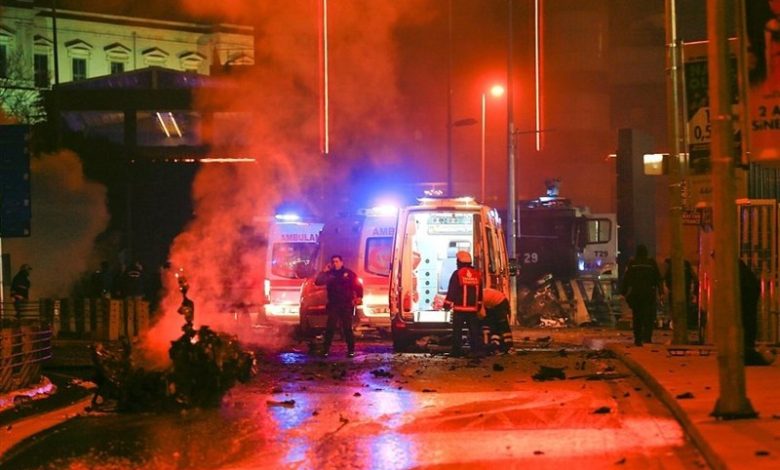


The validity of the global fight against terrorism, we read , can be measured to a large extent by the way victims are treated. If their rights are truly universal, geography, the identity of the perpetrator, nationality, or political relations of states should not determine the value of their suffering. Otherwise, the victim will also be unwittingly drawn into the very relationships from which international law was supposed to protect him.
At first glance, the victim of terrorism should not be a controversial concept. States may disagree about the nature of an armed group, its motives, the legitimacy of an act, or even the definition of terrorism, but someone who has lost their life or been injured in a bombing, shooting, or violent act should not necessarily be the subject of such a dispute. However, the experience of the past few decades has shown that disagreements about the definition of terrorism do not remain at the same level and sometimes spill over into the treatment of victims. In this way, an issue that is ostensibly of a legal and security nature also becomes an issue of justice and equality of human beings in the face of suffering.
The article “Double Standards in Defining Terrorism and Treating Victims of Terrorist Acts” looks at the issue from this perspective. The authors’ starting point is that the lack of a consensus definition of terrorism is not just a theoretical vacuum in international law. States are influenced by their political, security, and sometimes ideological interests in defining terrorist groups and acts, and these considerations can also affect the way victims are identified and protected. As a result, the issue of double standards is not limited to one group being considered legitimate by one state and terrorist by another; the consequences of this difference may also be seen in the level of attention paid to victims, the way they are represented, and even the type of political and legal support they receive.
The international community has been fighting terrorism for years, but there is still no comprehensive and binding definition that all governments can agree on. This situation did not fundamentally change after the September 11 attacks. The UN Security Council has committed governments to take broad measures to combat the financing of terrorism, restrict the activities of terrorist groups, and prevent the movement of their members, but it has not itself embarked on a comprehensive definition of terrorism. Efforts to develop a comprehensive convention against international terrorism have also failed to reach a final conclusion despite years of negotiations. Part of the problem lies in the fact that governments are unwilling to easily cede their authority to define terrorism to a common international standard.
This difference is not just due to legal difficulties. The nature of the relationship between states and armed actors, regional interests, geopolitical rivalries, and security considerations can affect the use of the term terrorism. In such circumstances, the definition of terrorism sometimes goes beyond describing a specific behavior and becomes part of a political conflict. A group that is a security threat to one state may be an ally, pressure tool, or supportable actor to another. The article also emphasizes this link between national interests and the difficulty of reaching a common definition. When these considerations enter the definition, it is natural that its effects are not limited to the perpetrators of violence but also extend to the way in which those who have been affected by that violence are confronted.
If an incident is officially recognized as a terrorist act, a series of legal, political and media reactions take shape around it. Governments condemn it, the media pay tribute to the victims, memorial services are held, judicial and security investigations are put on the agenda, and in many cases mechanisms are envisaged to support survivors. But not all victims of terrorism in the world receive this level of attention. In some regions, an incident remains in public and political memory for a long time, while in others, an incident of similar dimensions quickly falls off the agenda of the media and international institutions. This difference raises an important question about the equality of victims.
From a legal perspective, the principle is clearer than the dispute over the definition of terrorism. Direct and indirect victims of terrorist acts need protection, access to information, compensation, and independent and impartial investigations. The article also emphasizes this responsibility of states, noting that victims of such incidents face specific physical, psychological, and social consequences. These rights should not, as a rule, be dependent on nationality, religion, ethnicity, or the political status of the state to which they belong. However, the gap between this principle and what happens in the political and media arena is where the issue of double standards becomes important.
The media plays a decisive role in this. The way an incident is covered determines the extent to which its victims are present in public memory and the degree of social and political sensitivity towards their fate. Citing some studies on media coverage of terrorism, the article points to the difference in the way incidents are represented based on the identity of the perpetrators. Such a difference not only affects the audience’s perception of the perpetrator of violence; it also places the victim in a different position. An incident that is recounted many times brings the names and faces of its victims into public memory, while a victim of an incident that is rarely covered may be reduced to a number in reports, even internationally.
Of course, the amount of media coverage alone cannot be a measure of the presence or absence of discrimination. The magnitude of the incident, media access, geographical location, cultural proximity of the audience, and numerous other factors also affect the level of attention. However, when differences in coverage are combined with political orientations and differences in official treatment, it can no longer be attributed solely to the logic of the news. The visibility of a victim can influence demands for an investigation, pressure for compensation, support for families, and even the recording of an event in historical memory. For this reason, inequality in representation may ultimately lead to inequality in the recognition of the suffering of victims.
The commonly suggested way out of this situation is to arrive at a more comprehensive and unambiguous definition of terrorism. The article also raises such a need, emphasizing the recognition of victims’ rights and reducing the influence of political and media considerations. But decades of international negotiation experience show that reaching a consensus on a definition of terrorism is not an easy task. Perhaps for this reason, strengthening the victims’ rights framework could be a less contentious path. Even if governments disagree about exactly where a particular group or action falls, the principle of protecting people who are victims of violence should not be subject to that disagreement.
The bulk of international counter-terrorism mechanisms focus on perpetrators: identifying groups, freezing funds, exchanging information, arresting, extraditing and prosecuting them. In contrast, the status of victims still depends largely on the domestic laws of countries and the level of political attention given to each incident. Strengthening a victim-centered approach can partially redress this imbalance. The right to the truth, independent investigation, reparation, medical and psychological services, and the preservation of the memory of victims can be emphasized as a set of common principles without waiting for the end of the global dispute over the definition of terrorism.
Double standards in dealing with terrorism do not only undermine the credibility of counterterrorism policies; they also undermine trust in institutions that claim to uphold universal rules. The article concludes with this consequence, identifying discrimination among victims as one of the factors that exacerbates feelings of injustice and distrust. The credibility of the global fight against terrorism can be measured to a large extent by the way victims are treated. If their rights are truly universal, geography, the identity of the perpetrator, nationality, or political relations of states should not determine the value of their suffering. Otherwise, the victim will unwittingly enter into the very relationships from which international law was supposed to protect him.