Guterres: Spread of terrorism in Africa is fueling humanitarian crisis
Association for Defending Victims of Terrorism - The United Nations Secretary-General has warned of the growing threat of terrorism in Africa, particularly in the Sahel region, saying the security situation in the region is becoming increasingly critical and that the consequences of continuing this trend could be deadly. He called on member states to increase funding for humanitarian programs to help millions of displaced and affected people.

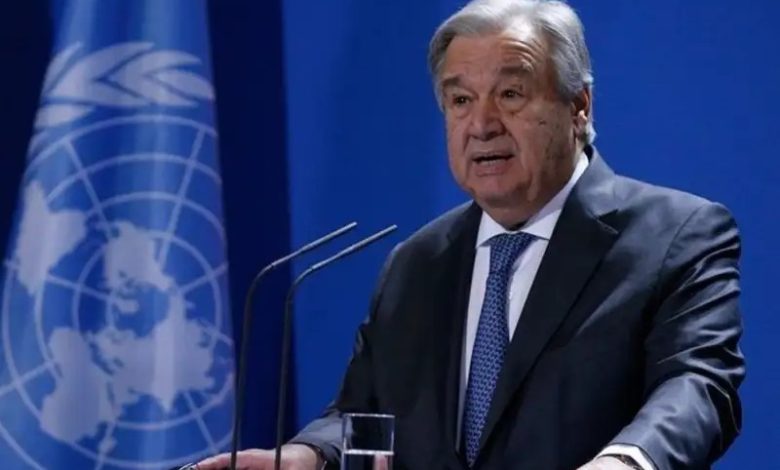

UN Secretary-General Antonio Guterres warned about the growth and spread of terrorism in Africa and stated: “The security situation in West Africa and the Sahel region is becoming more critical day by day, and the recent developments in Mali are a clear warning of the dangers ahead.”
UN Secretary-General Antonio Guterres told a Security Council meeting on Africa that since September, Jamaat Nusrat al-Islam wal-Muslimeen [JNIM] (which has declared itself an official affiliate of al-Qaeda in Mali) has disrupted fuel supplies along key corridors to the Malian capital, Bamako.
The Sahel region is a vast geographical strip in Africa, located between the Sahara Desert in the north and the tropical regions of Africa in the south. The region is about 5,400 kilometers wide and stretches from the Atlantic Ocean to the Red Sea.
The Sahel region encompasses areas of northern Senegal (from west to east), southern Mauritania, central Mali, southern Algeria and Niger, central Chad, southern Sudan, northern South Sudan, and Eritrea.
The UN Secretary-General added: “Over the past month, terrorists have continued to attack convoys under military escort, killing and abducting soldiers and civilians. This has caused enormous hardship for the population, as fuel and the goods, markets and basic services they rely on are in short supply, and in some cases, vital humanitarian operations – including UN life-saving operations – have been forced to scale back services due to fuel shortages.”
“If this situation continues, the consequences could be fatal for the people who depend on these vital programs. We risk a catastrophic ripple effect across the region,” Guterres warned.
He stressed: “Many countries are facing this situation. Terrorism in the Sahel is not just a dramatic regional reality. The connections of its groups in Africa and beyond make it a growing global threat.”
The UN Secretary-General stated: “The Sahel countries were already near the lowest human development index and suffered from high levels of poverty, weak institutions, and the catastrophic effects of climate change.”
Guterres stressed that in this fragile situation, armed groups and terrorist networks continue to exert pressure on government forces and are growing and expanding their reach, from Jamaat al-Nusra al-Islam wal-Muslimeen and ISIS in the Greater Sahara (ISGS) to ISIS West Africa, Boko Haram and Lakurawa – which remain active throughout the Lake Chad basin, particularly in parts of Nigeria and Niger.
ISIS West Africa, officially known as Islamic State – West Africa Province (ISWAP), is a militant group and administrative subsidiary of ISIS, an unrecognized Salafi jihadist paramilitary group and quasi-state.
The UN Secretary-General noted that, according to the Global Terrorism Index, five of the 10 countries most affected by terrorism are in the Sahel region. The Sahel region accounts for 19 percent of global terrorist attacks – and more than half of global terrorism-related casualties.
Guterres stressed: “This violence and instability have caused immense suffering. According to the UN High Commissioner for Refugees, some 4 million people are now displaced across Burkina Faso, Mali, Niger and neighboring countries. 14,800 schools across the Sahel have been closed, along with more than 900 health facilities, leaving millions without essential care.”
The UN Secretary-General said: “I urge Member States to maintain their strong financial support for humanitarian response programmes in the region. The six humanitarian appeals in the Sahel and Lake Chad basin for 2025 – requiring a total of $4.9 billion – remain severely underfunded.
He noted that so far, less than a quarter of this amount has been raised. In particular, the humanitarian response plan for Mali has only reached 16 percent – one of the lowest coverage rates worldwide.
The UN Secretary-General emphasized: “The world must express full solidarity with the people of this region who are enduring excruciating hardship and suffering.”