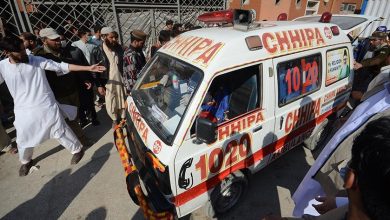
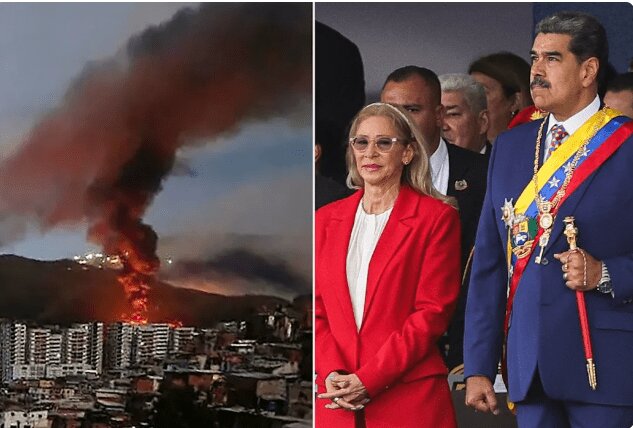


According to Hamshahri Online , “The red carpet for Mohammad Golani at the White House and the nighttime kidnapping of Nicolas Maduro in handcuffs”; these two images, which we witnessed in the United States in less than a few months, highlight the obvious duality of American foreign policy.
The United States of America is a country whose criteria for marking and relating to other countries are not democracy and human rights, but rather geopolitical interests and short-term expediency; a country that negotiates with terrorists in the name of freedom and sanctions and isolates the people’s elected representatives in the name of democracy.
On the evening of Saturday, January 13, 2021, the United States, under the orders of Donald Trump, launched a military operation against Venezuela and kidnapped the country’s elected president, Nicolas Maduro. Many countries have condemned the aggression, calling it a clear violation of human rights and international law.
The Trump administration took this action in violation of international law, even though a few months ago, by welcoming Mohammad Golani – a figure who was on the terrorist list until last year – it showed that its legitimacy is defined not based on the people’s vote or international principles, but rather on sectional interests.
Below, we compare some of the characteristics of two politicians, Trump’s favored and hated:
Venezuelan elections, Nicolas Maduro style
Maduro, with a long history in the Venezuelan political structure, from labor unions to the Ministry of Foreign Affairs and the Presidency, came to power through elections in three consecutive terms and, despite the unrest, had maintained the electoral structure and popular participation.
Holding the last round of presidential elections in 2024
Turnout of about 59% of Venezuelans
Nicolas Maduro won about 51.2% of the vote (over five million people)
Rival candidate Edmundo Gonzalez won 44.2% of the vote.
Syrian elections, Golani style (October 5, 2025)
However, Golani, who emerged from terrorist groups, had a history of membership in Al-Qaeda and founded the Nusra Front, and by force of arms and suppression of the opposition, took control of Idlib and then the Syrian transitional government. The elections held under his supervision also lacked transparency and real competition.
Holding elections without direct popular participation
Voter turnout statistics and eligibility criteria are unclear.
Threats and murders of a large number of independent and opposition candidates before the vote
Voting by approximately 6,000 to 7,000 members of the electoral commissions appointed by Golani for two-thirds of the seats (140 out of 210 seats)
The remaining one-third of the seats (70 seats) were appointed directly by Golani.
Political and security background
Maduro from driving a bus to the presidential office
1980 Caracas Metro Bus Driver/Labor Union Leader
2000-2006 Member of the National Assembly of Venezuela
2006 President of the National Assembly
2006-2012 Minister of Foreign Affairs of Venezuela
2012-2013 Vice President (Hugo Chavez)
2013 Interim President and then victory in the presidential election (50.66%)
2018 Presidential Election Victory (Second Round)
2024 Presidential Election Victory
2025 Intensification of US sanctions against Caracas and the Maduro government and the beginning of US military operations
The terrorist Golani who became a politician
1982 Born in Riyadh, Saudi Arabia
2003 Traveled to Iraq and joined the terrorist group Al-Qaeda led by Abu Musab Al-Zarqawi
2006-2011 Arrested by American forces and detained in Camp Bucca prison (Iraq)
2011-2012: Dispatch to Syria by Abu Bakr al-Baghdadi and establishment of the Al-Nusra Front, the branch of al-Qaeda in Syria.
2012-2016 Leadership of the Nusra Front and declaration of allegiance to Al-Qaeda
2013 Separation from ISIS after disagreement with Baghdadi
2016: Al-Nusra Front changes its name to Jabhat Fateh al-Sham and announces the severance of ties with Al-Qaeda
2017 Establishment of the terrorist group Hayat Tahrir al-Sham and terrorist activities in Idlib
2024 Confrontation with the Bashar al-Assad government and movement towards Damascus with the support of the West and some regional countries
2025 Announcement as interim president of the transitional period (January)
2025 Formation of a transitional government in Syria (March)
2025-2026 Diplomatic meetings (including Trump), lifting of sanctions, and US $10 million prize
A look at a bloody year of Golani’s presidency
December 2024: About 500 to 600 civilians killed in sectarian clashes between Golani forces
January 2025: About 236 Syrian civilians killed
February 2025: 222 civilians killed
March 2025: 1,500 to 1,600 civilians, mostly Alawites, killed
December 2025: 1,000 to 1,500 civilians, mostly Druze, killed
Total deaths from political violence in one year of Golani’s rule: 3,700 civilians