Iran warns of resurgence of terrorism in Syria
Association for Defending Victims of Terrorism - Iran's Ambassador and Permanent Representative to the United Nations called the revival of terrorism and the increase in ISIS's operational capabilities a threat to Syria and the entire region, and said: "We will continue our support for an independent, stable, and secure Syria."

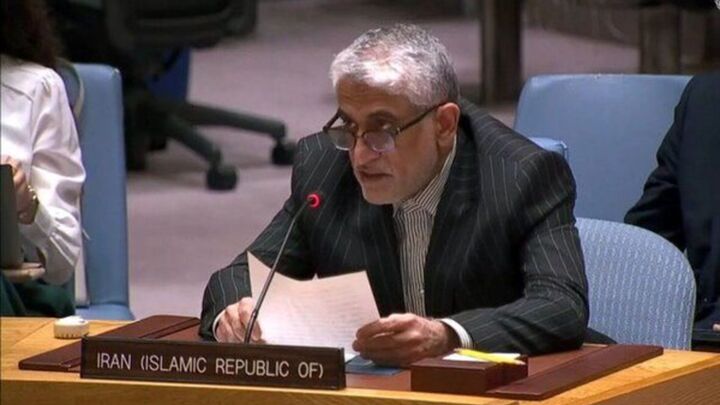


According to Shabestan News Agency , Amir Saeed Iravani, Ambassador and Permanent Representative of the Islamic Republic of Iran to the United Nations (Thursday, December 17), attended the Security Council meeting on the situation in Syria. Referring to the recent visit of Security Council members to Syria and Lebanon, which was initiated by Algeria, Denmark, and Slovenia, and the report presented today, he said: “We hope that this visit will lead to concrete and effective results from the Security Council, especially in forcing the Zionist regime to end the occupation and immediately stop its illegal actions.” Iravani added: “A year has passed since the formation of the Syrian interim government. During this period, important transitional steps have been taken by Damascus. However, the Syrian people continue to face acute social, humanitarian, economic, and security difficulties.” The continued activity of armed groups outside the control of the Syrian authorities, accompanied by arbitrary violence against civilians and violations of the rights of minorities, remains deeply concerning and constitutes a serious threat to peace, stability, and national cohesion.
In another part of his speech, the Iranian ambassador and representative stated: “The resurgence of terrorism remains a serious and urgent threat to Syria and the entire region. The re-emergence and increase in ISIS’s operational capabilities, including recent terrorist attacks, are a reminder of the enduring and deep-rooted nature of this threat.” He said: “The Islamic Republic of Iran firmly condemns terrorism in all its forms and manifestations and reiterates that the fight against terrorism must be comprehensive, non-selective, and fully in accordance with international law, and with full respect for the sovereignty and territorial integrity of the Syrian Arab Republic.”
In another part of his remarks, Iravanii stated: “Over the past year, the Zionist regime has intensified its illegal use of force, expanded its military presence, and adopted policies aimed at consolidating and normalizing the occupation of Syrian territories.” Stating that we strongly condemn the illegal aggression of the Zionist regime against the town of Beit Jan on November 28, 2025, he added: “An aggression in which the terrorist forces of the Israeli regime killed 13 civilians, including women and children, injured dozens, and forcibly displaced the residents of the area by deliberately and indiscriminately shelling residential buildings. As stated in the letter dated November 28, 2025, of the Permanent Representative of the Syrian Arab Republic to the Secretary-General and the President of the Security Council, this criminal attack is considered a grave war crime under international law.” The Iranian representative noted: This aggression and the resistance of local residents against the aggression of the Israeli regime, with the support of the Syrian interim government, clearly reveal the inevitable and destabilizing consequences of long-term occupation and the continuous repetition of aggressive acts.
Iravani said: “The actions of the Israeli regime are neither defensive nor accidental; rather, they are part of a deliberate strategy to consolidate the occupation, divide Syria, and weaken its national cohesion by exploiting ethnic and sectarian differences and promoting separatist agendas. Such behavior is a direct threat to regional peace and security.” He added: “The Security Council cannot remain passive in the face of these violations. Continued inaction, selective silence, or political support for the Israeli regime by a permanent member of the Council will only normalize and legitimize the occupation and its aggressive actions, rendering Security Council resolutions ineffective and unenforceable.”