Paying ISIS to keep a cement factory running: How a major French company financed one of the world’s most brutal terrorist groups
Association for Defending Victims of Terrorism - European Union Reporter's website, in a report written by Louis Auger, examined the financing of ISIS terrorism in Syria by a French company.

On May 23, 2026, the families of victims of ISIS attacks and American military personnel killed or injured fighting the terrorist group demanded access to nearly $778 million paid by French cement giant Lafarge under a 2022 settlement with the U.S. Department of Justice, the report said. Just three days earlier, on May 20, legal experts at Global Law Compliance argued that the Lafarge case could set a landmark precedent for multinational companies operating in war zones, warning that companies could increasingly face criminal liability for maintaining business relationships with armed groups during times of war. Human rights organizations have also continued to raise concerns about two unresolved aspects of the scandal: the failure to pay compensation to former Syrian employees who allegedly faced kidnapping, shelling and other dangers while working at Lafarge’s factory in Syria, and an ongoing French investigation into whether the company’s dealings with ISIS could amount to complicity in crimes against humanity.


The developments have drawn attention to one of the most controversial corporate scandals in the Syrian civil war. It has been almost a decade since the French newspaper Le Monde first revealed that Lafarge, which later merged with Swiss-based Holcim, had paid millions of dollars to ISIS and other armed groups in Syria to keep its cement plant operating. The revelations sparked an international scandal by exposing the lengths to which a major multinational company is willing to go to protect its business interests in a war zone, including entering into financial agreements with terrorist organizations. The affair has also become a major embarrassment for France, where legal proceedings related to the case continue to this day.
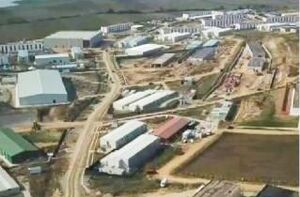
A historic turning point came on April 13, 2026, when a court in Paris found Lafarge guilty of financing terrorist organizations in Syria during the country’s civil war. It was the first time in French history that a company had been held criminally liable for supporting terrorism. The court found that between 2013 and 2014, the company paid almost $6.5 million to armed groups, including ISIS, to keep its cement plant in Jalaliyah, northern Syria, operating. Several former executives and middlemen, including former CEO Bruno Lafont, were sentenced to prison, while the company was fined for financing terrorism and violating sanctions imposed on Syria. The judges found that Lafarge’s management knew who it was dealing with and made a conscious decision to continue making the payments to protect its business interests. Judge Isabelle Pervoux-Després stated: “It is absolutely clear to the court that the sole purpose of financing the terrorist organization was to maintain the operation of the Syrian factory for economic reasons… These payments constituted a real commercial partnership with the Islamic State.”
The April ruling was not the first legal blow the company has suffered. In 2022, Lafarge admitted in the United States that its Syrian subsidiary paid nearly $6 million to ISIS and the Nusra Front between 2013 and 2014 to keep the cement plant operating and to ensure the movement of employees, suppliers and goods through territory controlled by the militants. The company also admitted to purchasing raw materials from suppliers linked to ISIS. As part of a settlement with the U.S. Department of Justice, Lafarge agreed to pay nearly $778 million in fines and restitution.
However, the legal fallout from the scandal may not be over yet. French authorities are still investigating a separate case involving allegations of complicity in crimes against humanity. According to prosecutors and human rights groups, Lafarge maintained business ties with ISIS even after the group became notorious for mass killings, torture, executions, kidnappings and the persecution of civilians. Organizations such as Sherpa and ECCHR argue that the terrorist financing conviction in April may be just the first chapter of the company’s legal woes, as it continues to push for a full trial on charges of crimes against humanity.
The unresolved issue of the former Syrian workers has created further controversy. Human rights advocates have criticized the fact that many of the workers who remained at the factory during the conflict, apparently exposed to serious risks, have not received compensation. The workers were reportedly forced to pass through checkpoints manned by armed groups and faced threats of kidnapping, shelling and violence. Some were said to have been abducted or otherwise abused. Critics argue that the court’s ruling on terrorism financing fails to adequately address the suffering these workers have endured.
Lafarge purchased the Jalbiya cement plant in northern Syria in 2008 for approximately €680 million and began operations in 2010, shortly before the start of the Syrian civil war the following year. While many multinational companies withdrew from Syria in 2012, Lafarge evacuated only its foreign staff, leaving Syrian employees on site until September 2014, when ISIS finally took over the facility.
The crimes committed by ISIS in Syria did not prevent Lafarge from maintaining its relationship with the group, but it soon became clear that ISIS posed a threat far beyond the Middle East. During the April 2026 trial, Judge Provost-Després stressed that the company’s payments had empowered organizations responsible for deadly attacks in Syria and abroad, including in France. In November 2015, ISIS carried out the deadliest terrorist attack in French history, targeting the Bataclan concert hall, the Stade de France stadium, and restaurants and cafes in Paris. The attacks left 130 dead and more than 350 injured. In this context, the revelation that one of France’s most prominent industrial companies had entered into financial agreements with one of the world’s most notorious terrorist organizations sparked widespread public outrage.
The scandal became more politically sensitive after the French newspaper Libération reported in 2021 that French intelligence services were allegedly aware of Lafarge’s payments to ISIS and other armed groups. According to another investigation by Libération, Jean-Claude Villard, Lafarge’s security director, met with French intelligence officials at least 33 times between 2012 and 2014. He claimed that the company regularly provided information on the conditions in northern Syria and the activities of armed groups. During the 2025-2026 trial, former Lafarge CEO Christian Herreau also testified that he had informed the French ambassador to Syria about the company’s contacts and payments to ISIS, although the court neither confirmed nor denied these claims.
Holcim, the Swiss company that merged with Lafarge in 2015, has tried to distance itself from the Syria scandal and its legal ramifications. The company insists it was unaware of the payments to ISIS and that former Lafarge management is responsible. Human rights groups remain skeptical of efforts to fully isolate Holcim from the affair. “It’s hard to believe that Holcim’s leadership was unaware that the company it was merging with was operating a facility during the Syrian civil war,” Anna Kiefer of the French Sherpa Association said in January. “It’s certainly been discussed, but we simply don’t know any more.”
The Lafarge affair has become one of the most significant corporate accountability cases in modern history. It revealed that some multinationals are willing to turn a blind eye to the actions of terrorist organizations when major financial interests are at stake. However, the recent conviction, ongoing investigations, and mounting demands from victims and former employees suggest that the consequences of these decisions are still unfolding – and may continue to shape how businesses operate in war zones for years to come.
This and other reports show that terrorist financing by European countries is carried out through so-called private companies with the aim of maintaining a production line. Otherwise, a company that eventually falls into the hands of ISIS would not need to maintain such a production line in a war-torn country.